Anritsu and dSpace simulate collision avoidance at MWC
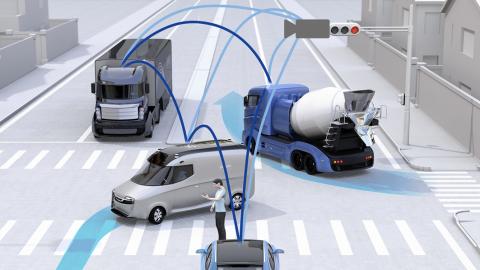
Anritsu and dSpace jointly demonstrated the integration of PC-based simulation systems with sensor-realistic simulation in a 5G network emulator at this week’s Mobile World Congress (MWC) in Barcelona.
The joint showcase demonstrated how to avoid collisions between vehicles and objects or people in intersections with limited visibility.
The example application used in the demonstration is the AICW advanced intersection collision warning. For this purpose, sensor-based information is exchanged between the vehicles and the infrastructure in the intersection area through the use of 5G communication technology.
In the demonstration, V2X data and video data collected by camera sensors were provided and analysed to warn of people or objects such as vulnerable road users (VRUs) located in blind spots, commonly found at intersections. The demonstration used 5G network slicing technology to establish a separate URLLC link to provide V2X hazard warning data and an eMBB link to share HD video.
"This joint integration is a significant step forward for 5G V2X testing and emulation," said Jonathan Borrill, head of global market technology at Anritsu. “This industry-leading demonstration is an exciting example of the development of 5G V2X applications.”
Gregor Hordys, responsible for connectivity topics at dSpace, added: "This adds a state-of-the-art sensor-realistic and vehicle simulation to the radio communication test system to enable testing of advanced applications for connected and cooperative automated driving, based on 5G and edge computing in the lab."
To provide a 5G network slicing test environment for automotive V2X use cases, the showcase used an Anritsu MT8000A radio communication test station and dSpace VEOS PC-based simulation platform with the dSpace Aurelion for sensor-realistic simulation.
