Ansible opens R&D centre with advanced vehicle simulator
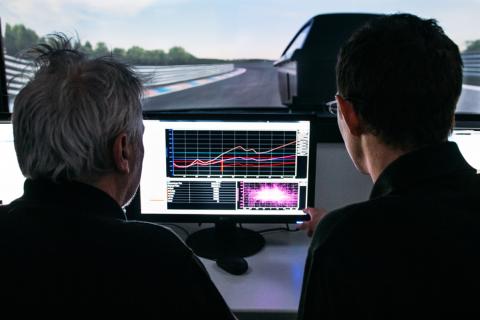
A £2m research and development centre that features what is claimed to be one of the world’s most advanced vehicle simulators has opened in Hethel, Norfolk, UK. Ansible Motion’s facility at the Hethel Engineering Centre will be used to develop and showcase simulation technologies for testing and developing vehicles in a virtual environment.
The facility houses the company’s Delta series simulator with a six degrees of freedom motion system, powered by 16 5GHz computers, with five projectors offering a frame rate that is five times faster than a cinema projecting a 240˚ wrap around view on an 8m screen. The centre also has a full control room to monitor up to 300 channels of data, separate viewing gallery and secure conference rooms.
Founded in 2009, Ansible Motion designs and builds driver-in-the-loop simulators that are used by vehicle manufacturers and motorsport engineers to develop and test vehicles. The engineering-class simulators can be used to validate safety vehicle systems, sign off vehicle settings and in motorsport, where the company has already supplied one F1 team, to define aero, gearbox and suspension settings and predict a lap time before creating a physical car.
“Simulators such as the Delta series in our new R&D centre offer vehicle manufacturers a no-compromise method to reduce development costs and time,” said Kia Cammaerts, founder of Ansible Motion. “Using our simulator has cut the validation time from ten days to just three for an electronic stability control programme for one particular car maker. Apply those kinds of savings in cost and time across the whole car and it explains why we are now getting more and more enquiries from global OEMs to see what our simulator can do. This R&D centre will enable automotive engineers to assess how our simulator performs and it also serves as an internal development resource to ensure our simulators, built here in Norfolk, remain at the leading edge of this invaluable technology.”
The rising demand for Ansible Motion’s simulator has been driven by the different approach it has taken to create its light and compact platform. With a strong emphasis on getting the driver to engage in a realistic way with the simulator, the company focussed on creating an immersive experience by embedding a model of the human vestibular system in the software and eschewed the usual hexapod machine architectures to ensure the most realistic vehicle motion.
“Experienced drivers feel the difference straight away when they drive this simulator,” said Cammaerts. “We were inspired to open our R&D centre to visitors so rather than just tell people about how different our approach is, they can come here and actually experience it. One recent European OEM visitor with significant experience with other simulators was stunned by the realism of our simulator. We know that climbing aboard and having a drive is the best way for someone to experience the Ansible Motion difference, so we are pleased to be able to allow this peak behind the curtain at our R&D centre.”
