Capacitors: Up a gear
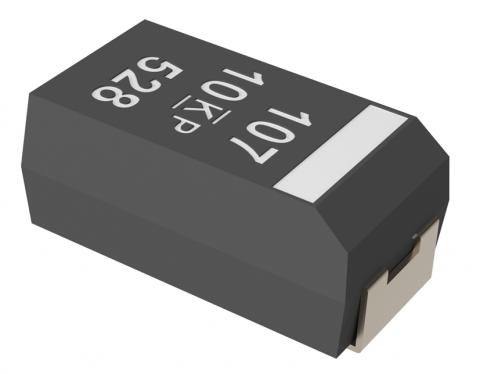
Jayson Young from Kemet gives the inside line on tantalum capacitors for automotive applications
Tantalum capacitors provide high volumetric efficiency and stability over time and temperature, making them a strong choice in consumer mobiles and automotive electronics. Top consumer-electronics brands are taking full advantage of the technology, but caution among car makers in the USA in particular could be holding back progress.
For more than two decades now, car makers have been incorporating more and more electronic systems to reduce emissions, improve safety and deliver attractive new features for customers. Safety equipment such as airbags and antilock brakes, as well as driver assistance systems such as collision avoidance sensors and parking assist are typically controlled electronically. Power steering is changing from hydraulic to electric to save weight and cost. And infotainment systems are becoming increasingly sophisticated, often comprising one or multiple LCD panels to display camera feeds, GPS mapping, and provide access to the growing variety of connected-car applications.
To compete, established car makers must ensure that on-board electronic systems are not found wanting in terms of performance or usability.
Natural caution
Understandably, the automotive industry has moved very carefully into the electronic age. It has been important to keep a clear focus on issues such as safety, reliability and traceability. Automotive quality and supply-chain practices can also be regarded as the gold standard: after all, the AS9100 quality-management system now used throughout the aerospace industry is based on practices from the automotive business and was developed by the American Society of Automotive Engineers (SAE).
When specifying components for on-board vehicle electronics, the established automotive brands rightly prioritise component reliability and supply-chain security over outright performance. This attitude has promoted a cautious approach when selecting some types of electronic components, notably tantalum capacitors used for purposes such as energy storage, filtering, smoothing and decoupling. Some companies have gone so far as to implement strict no-tantalum procurement policies and to instruct design engineers not to specify tantalum capacitors. For them, tantalum capacitors are synonymous with instability in terms of component lead times and prices, and a fear that devices may catch fire in the event of failure.
Neither concern is valid today.
From experience, working with the leading car makers worldwide, it is fair to say that the German car industry is more willing to leave historical notions behind and take advantage of performance gains offered by tantalum capacitors, while the US industry is a bit more conservative in its approach.
Supply chain
It is true that the supply of raw tantalum has been inconsistent in the past. Much of the world’s easily extractable tantalum deposits are located in conflict prone regions, such as the Democratic Republic of Congo. Companies making tantalum products such as capacitors have tried to avoid sourcing materials from these areas to stay on the right side of legislation and public opinion. This has forced tantalum miners to operate in other areas of the world. Unfortunately, tantalum deposits in non-conflict regions tend to be found in hard rock and are therefore difficult and expensive to extract.
Commercial mining organisations have had to ensure a high minimum price for extraction to be financially viable. In the past, when the market price has fallen below this threshold, they have simply halted production and waited for the price to rise.
This situation certainly presents an unacceptable supply-chain risk for companies building automotive subsystems in high volumes. However, some companies have taken action to overcome these difficulties in the supply chain. Simply avoiding the Congo is not satisfactory either for the electronics industry or the country’s own minerals enterprises, so some took positive action to secure a supply of verifiable conflict-free tantalum. This meant building an exclusive link with a tantalum mine in the Congo, and working with miners and the local community, as well as independent organisations such as the International Tin Research Institute (ITRI) and the Coopérative des Artisanaux Miniers du Congo. This helped ensure the best possible working and trading conditions, and it also helped to manage a thorough programme of investment for the local community.
Tantalum processing factories in the USA and Mexico help create a unique vertically integrated, closed-pipe supply chain. This provides assurance that all tantalum powders, wire and other products used in capacitor manufacture are conflict-free and protected against delays or contrived price fluctuations.
The Dodd-Frank Wall Street Reform & Consumer Protection Act is the American legislation on conflict minerals. The European Union is preparing similar legislation, aimed at preventing criminal gangs profiting from conflict.
The closed-pipe model gives highly stressed supply-chain managers the best assurance that tantalum capacitors can be procured as easily and as safely as any other component. It is worth noting that major consumer brands, which need to take advantage of the high volumetric efficiency of tantalum capacitors in subsystems such as on-board power circuitry to achieve the advanced functionality and compact form factors demanded by consumers, are using tantalum capacitors routinely in their products. They are not experiencing any supply-chain problems.
Technological improvement
Another concern that has encouraged companies to avoid specifying tantalum capacitors is the fear that devices may ignite in the event of failure. Older – now termed classic – tantalum capacitors that feature manganese dioxide (MnO2) cathode technology may, under certain circumstances, ignite or emit smoke in the event of component failure. The risk of this type of failure is related to the cathode’s high oxygen content.
Polymer tantalum capacitors, unlike MnO2 devices, have only benign failure modes with no risk of ignition. Moreover, devices benefit from ultra-low equivalent series resistance (ESR), which ensures low internal heating and energy loss. Hence low ESR serves to increase reliability and efficiency, which is extremely important in today’s automotive applications. Polymer tantalum capacitors have been available for more than fifteen years, and automotive-grade devices are currently at the forefront of development.
By taking advantage of recent advancements in packaging, it is now possible to produce polymer tantalum capacitors that can meet AEC-Q200 requirements and still deliver the high volumetric efficiency, stability and ultra-low ESR the automotive industry is looking for to meet objectives such as optimum energy efficiency, compact module sizes, high reliability and ruggedness, and long operating lifetime.
Conclusion
The consumer electronics industry is exploiting the high performance of today’s tantalum capacitor technologies to deliver sleek, efficient and feature-rich new products to highly demanding end-user markets. Automotive brands must take a similar performance-oriented approach to electronic design, to deliver the experiences and value their customers have come to expect. Improvements in the tantalum supply chain, and advanced capacitor technologies in AEC-Q200 qualified polymer devices, now allow designers of automotive systems to specify tantalum capacitors with much greater confidence than ever before.
Jayson Young is director of polymer capacitors at Kemet
