Ecall: Talking Turkey
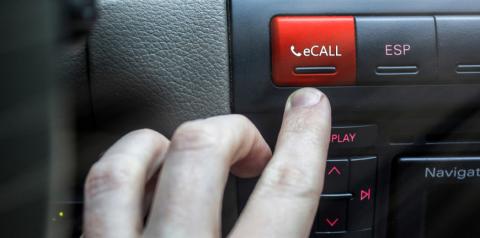
Begüm Yavuzdoğan Okumuş from Turkish law firm Gün + Partners discusses the particular requirements for in-vehicle emergency call systems in Turkey
Companies planning to deploy ecall services across Europe should be aware that the authorities in Turkey have passed their own regulations governing the use of the systems. These in-vehicle emergency call systems will automatically make a call to the emergency services if a car is an accident.
Mobile operators are a key element in the operation as they will be responsible for carrying the ecall back to the emergency call centre. However, they should be aware that regulations are not uniform across countries, and Turkey is a good example.
Legislation regulating in-vehicle emergency call systems has been on the agenda of the European Union since 2007. Regulation 2015/718 concerns type-approval requirements for deploying the ecall in-vehicle system based on the 112 service. It became law within the EU in March this year.
The in-vehicle system detects location information of the vehicle via GPS and activates in case of an accident. It estimates the damage to the vehicle through various sensors. A call is made to an emergency call centre. This system may also be activated manually depending on the circumstances.
In the first project for harmonised in-vehicle ecall systems between 2011 and 2013, nine EU countries started the implementation; and six more countries were included in project two between 2013 and 2015; Turkey was among the pilot countries.
The primary objective of the EU projects was to set up the in-vehicle emergency call systems within EU countries and ensure the coordination of the countries’ ecall services.
In Turkey, the Ministry of Science, Industry & Technology published its own regulations on type approval, which was prepared as part of the harmonisation process with EU legislation. It also entered into force in March this year. The regulation formulates the subjects of the manufacturers’ obligations as regards the 112-based in-vehicle emergency call systems and relevant authorisation.
The Turkish Information & Communication Technologies Authority also referred to regulations regarding 112-based in-vehicle emergency call systems in January this year. It was concerned about the risks that could be experienced because these systems were implemented through a connection processed via foreign operators. Thus it said that the information system and services needed must be provided from domestic and national resources.
If there is no sim card, esim (embedded sim) card or a module that serves as a sim card in the ecall system or in the event connection to the network of the relevant operator of subscription fails at the time of the ecall, it said appropriate measures must be taken by the operators for such an ecall to be transferred to the relevant emergency call centre by the operator who receives the call.
If such modules are used solely for ecall purposes, they must be procured from the mobile operators that operate in Turkey or must be programmable so they can be controlled by such operators. However, subscription contracts are not required for the communications modules, but the operators must take all necessary measures to ensure that such modules can call 112 only and be called back by 112.
For vehicles manufactured in Turkey or imported in accordance with the ecall regulations, the sim card or module must be procured from the mobile operators that have been authorised to perform mobile electronic communications in Turkey or be programmable so they can be controlled by such operators. Relevant subscription transactions must be conducted in compliance with the applicable legislation.
The servers for the communications systems that are on board vehicles manufactured in Turkey or are imported in accordance with the ecall regulations and enable the rendering of value-added services in addition to ecall must be kept and located in Turkey. Personal data on the system must not be transferred abroad without the express consent of the data subject.
In light of this, if there are ecall systems within vehicles manufactured in or imported to be used in Turkey, the manufacturers must be mindful of the fact that they will be subject to these various additional regulations.
Begüm Yavuzdoğan Okumuş works for Turkish law firm Gün + Partners
