Electric Vehicles: In pursuit of efficiency
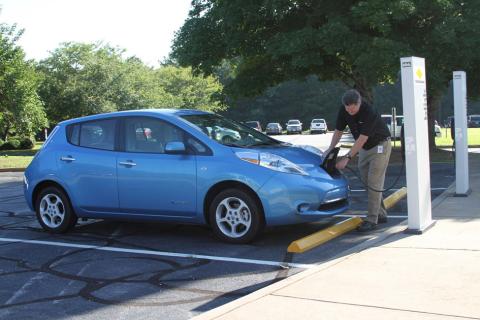
Anoop Gangadharan from Yokogawa looks at how the drive for energy efficiency is fuelling the growth in electric vehicle use
With increasing emphasis on reducing global warming and carbon footprints, governments, businesses and consumers are contributing towards energy efficiency. Initiatives such as the European energy efficiency directive have encouraged optimised generation and use of energy.
Volatile fossil fuel prices, increasing energy demands and government led efforts to reduce emissions suggest that energy efficiency will be of increasing relevance in the years ahead. With this rise in energy and environment consciousness, alternative fuels, hybrid and electric vehicles are fast gaining adoption.
Evolving markets
The turnabout in the electric vehicle industry has mostly been driven by ever-tighter efficiency and emission standards. For consumers, the major barriers to demand for electric vehicles were charging infrastructure, range anxiety and cost of ownership. But with more than 100,000 charging stations across Europe, shortened charging times and batteries offering greater range at ever declining prices, these barriers are starting to come down. ING estimates that high range battery electric vehicles will become cost competitive on total cost of ownership with a comparable petrol car in 2024.
The European Union is seeking efficiency improvements in the next five years that would be roughly double the gains made since 2010. This, along with volatile oil prices, puts pressure on car makers to sell more electric and hybrid vehicles.
Industry response
Events such as the Paris Motor Show, Motiv8 forums and others show a clear intent and commitment from the major players towards hybrid and electric vehicles. Giants such as Jaguar Land Rover, GM, Toyota, Mazda, Mitsubishi, Nissan, Volvo, Ford and Daimler are all following Tesla’s lead, having committed to an all-electric future as the coming decade looks to be the one where electric vehicles take over.
A recent report by Bloomberg New Energy Finance and McKinsey suggests that by 2030 electric vehicles will be a dominant mode of transport.
However, despite commanding a quarter of global car production, the European automotive industry owns only three per cent of the world’s electric vehicle market and faces intense competition from Asia and North America as the stronghold of internal combustion engine (ICE) vehicles begins its slow decline. As engines, transmissions and exhausts representing one third of the value in automotive supply are swapped for electric motors and battery packs, the face of the powertrain market is changing.
Challenges
Given the convergence of socioeconomic, political and technological trends towards environment and energy consciousness, automotive manufacturers are now faced with new challenge as they chase excellence in safety, performance and efficiency. This means that they need to extract maximum efficiency from the charging system, the powertrain and components of the extended vehicle system. This involves a variety of tests across the development and production life cycles to ensure adherence to international standards such as WLTP, NEDC, Ansi and SAE, and other internal standards for safety, quality, performance, durability and emissions.
Energy efficiency
Although more efficient than conventional ICE vehicles, the electric drive systems of electric cars do suffer from drivetrain and other losses in power delivery, sensing technologies, torque control systems and more. According to Fueleconomy, the energy requirements in electric vehicles estimated for 55% city and 45% highway driving show that of the 100% of electric power that an electric car is charged with, 16% is lost in charging the battery, 16% is lost in the drivetrain, 2.5% is lost via steering, powertrain cooling and control systems, and 0-4% is lost via various electrical, electronic and communications systems.
This leaves 60 to 65% of the total electric power to power the car forward of which 33% is lost in braking, although with regenerative braking or kers (kinetic energy recovery system) 17% of that can be reused.
Innovation and measurement
Despite efficiencies that far outstrip traditional ICE vehicles, electric cars could do with improvements in charging infrastructure, range anxiety and pricing to encourage mainstream adoption. Advances in power semiconductors, charging technologies and drivetrain systems, however, herald an optimistic outlook for affordability in electric vehicles as manufacturers look to optimise powertrains, vehicle communications, braking efficiency, suspension systems and more.
To achieve lower emissions, greater efficiency and longer distances, automotive manufacturers will need reliable measurement methods to extract accurate and actionable insights across the development life cycle.
Powertrains typically need multi-channel DC and AC analysis along with physical parameters such as rotational speed, fuel injector pulse times and crank angles measured from sensor signals, rotary encoders and so on.
Developing individual components in the early stages may only need waveform analysis at limited accuracies, but when a multi component subsystem or system is concerned, optimising the system is favoured over an individual component. Optimising for efficiency in this ecosystem of components, systems and subsystems will take consistently reliable measurements.
Anoop Gangadharan is product marketing manager at Yokogawa
