Ennovi develops sustainable flexible circuits for EVs
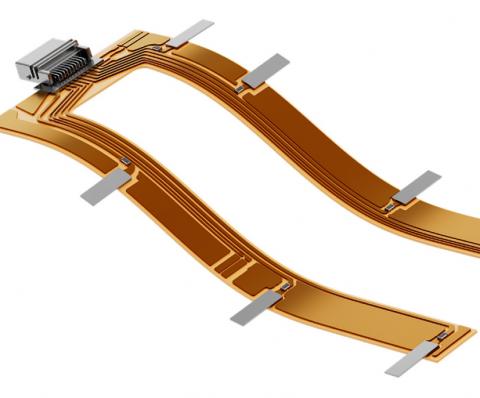
Ennovi has developed a sustainable way of producing flexible circuits for low-voltage signals in electric vehicle (EV) battery cell contacting systems.
While flexible printed circuits (FPC) are often employed in these systems, they are the most expensive component in the current collector assembly. Ennovi’s flexible die-cut circuit (FDC) technology is said to be more cost-effective and sustainable, with fewer manufacturing procedures and faster continuous reel-to-reel production.
Generally, FPCs are manufactured using a multi-stage, batch photolithography process to etch copper traces for the flexible circuit. This production process uses corrosive chemicals that dissolve the unwanted copper.
In addition, it takes a lot of time and energy to extract the waste copper from the chemicals, making it difficult to recycle effectively. The die-cutting process allows for instant recycling of the copper, making it preferential to chemical etching.
Compared with FPCs, which have a size limitation of 600 by 600mm, FDCs boast no length restrictions as they are manufactured reel-to-reel.
Under certain design considerations, the FDC provides similar performance characteristics to FPCs. These results were confirmed through in-house dimension, thermal shock, trace resistance, temperature rise, insulation resistance and high-voltage testing.
“Adopting the FDC capability for flexible circuits aligns with our vision to think outside the box in creating a sustainable battery value chain for EVs,” said Gustavo Cibrian, product manager at Ennovi. “Our efforts enable Ennovi to offer battery manufacturers a CCA design option that balances their imperatives in terms of cost, time and performance, allowing them to design to cost.”
Headquartered in Singapore, Ennovi has more than 10,000 employees across 15 sites globally.
