Guest blog: What will happen in 2021?
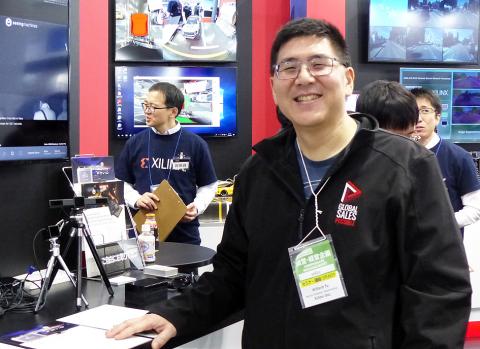
Willard Tu, senior director of automotive at Xilinx, gives his predictions for 2021.
The automotive industry will continue to embrace new technologies and approaches as a stepping stone to autonomous driving.
Among the changes that we’ll be seeing in 2021 are that artificial intelligence (AI) will go beyond adas.
For example, vehicles will have prognostics, the ability to offer self-diagnosis, virtually eliminating the worrisome situation of being stranded when your vehicle breaks down.
Just as an AI can create feedback as to driving habits for fuel efficiency, an automated vehicle equipped with cameras, radars and lidars can provide a safe environment that can ensure accident avoidance for a new driver, and can also coach in real time just as a parent would teach their children.
Ironman had Jarvis, Knight Rider had Kitt, Space Odyssey had Hal 9000. While this kind of all-encompassing system is a bit farther out, car makers are already in the planning stages for such vehicle valets. These systems will keep drivers and passengers safe, informed, entertained and productive. Voice and gesture interfaces will intuitively understand commands. Augmented reality will aid in navigation, providing points of interest or alerting of safety issues, using VR projection to reveal what is behind pillar blind spots.
AI valets will need a unique blending of AI voice and gestures. These AI technologies are only in their infancy, and the hardware will need to adapt as the systems improve. OTA updates will increase the longevity of the system.
These systems will be able to anticipate a driver’s driving mood, which could be anticipating a leisurely Sunday drive, or seeking to get to a destination quickly.
Complex camera systems will be needed to aid VR overlays.
Autonomous trucking will pave the way for autonomous passenger vehicles.
The trucking industry is already going autonomous, and we’ll see even more activity in this space in 2021. We will see long-haul trucking from depot to depot, highway-only driving on special corridors that are enhanced with special 5G connected land-based sensors arrays, and emergency remote driver intervention – drone mode.
Electric vehicle (EV) growth will transform America’s urban and rural planning. In many countries, such as Japan, China and Germany, train stations are a hub for shopping and restaurants. EVs will necessitate the need for charging stations at hubs that will mirror these train stations, providing services to entertain consumers while they wait for their EV to recharge.
Battery recycling will emerge as a business. The world needs approaches for dealing with battery disposal and recycling to prevent future environmental impact.
Automotive OEMs will finally unlock reoccurring revenue streams and brand loyalty.
Car companies have long aspired to use the personal-owned vehicle as a platform for recurring revenue. One example of this is the foray of car makers into satellite radio with XM Satellite radio and Sirius Satellite radio.
As car makers look to create upgradeable HPCC (high-performance central computing) nodes in the vehicle, they will unlock the ability to sell features similar to the rise of app stores for mobile phones. These new architectures are starting to be embraced, so be on the lookout for car makers departing from the traditional, low-cost distributed ECU mindset and transition to a flexible adaptable platform that can support features yet to be designed today.
Associated with this, OEMs will create brand loyalty by allowing you to transfer your in-vehicle apps purchased in a one vehicle to a new vehicle as you pay your subscription fees, the same way you transfer apps today to your new mobile phone.
