Innovating industry
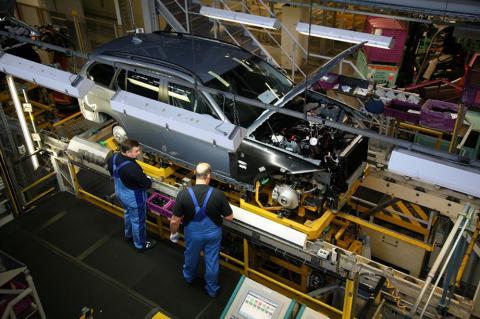
Graham Dewhurst, director general of the Manufacturing Technologies Association, discusses some examples of automotive innovation in action in the UK
Innovation is the process of generating new ideas and bringing those ideas to life. It is arguably the most powerful weapon manufacturers have in their armoury to achieve competitive advantage. Innovative manufacturers are more productive and typically grow at twice the rate of those that fail to innovate. They also tend to be more competitive, and respond better to change.
Quite simply, if a company doesn’t make time for innovation, its prospects for success and long-term viability as a commercial concern are slim.
Structural changes over the past three decades have meant the UK has a manufacturing capability that is technology-led and highly innovative. British manufacturers have always led the innovation curve and today the country is home to major players in automotive engineering disciplines.
Britain is the fourth largest vehicle producer in Western Europe. Last year, it produced 1.58 million vehicles, according to the Society of Motor Manufacturers & Traders, with a car, van, bus or truck rolling off a UK production line every 20s – more than 80% of which are exported to over 100 countries.
With 2.63 million people currently employed directly in Britain’s manufacturing sector, the future of the industry depends on its ability to maintain its technological competitive edge. Engineering-based manufacturing, with its need to invest for the future and remain internationally competitive, has been leading the way back to recovery. The UK’s Office for National Statistics estimates that engineering-based manufacturing industries contributed £212bn to the UK economy and accounted for £129bn of exports in 2012. In 2013 British companies invested in machine tools and related equipment at a faster pace than for most of last year.
Technology strategy
For decades, the UK’s industrial base was at best unfashionable and at worst dismissed as a hangover of the past. Perhaps one of the best illustrations of this was the misfortune of British Leyland Motor. Formed in 1968 by the merger of Leyland Motor and British Motor Holdings, the new company was meant to represent a jewel in Britain’s industrial crown, but by 1975 it had entered administration and the next decade would see a changing of the guard as industry gave way to financial services as the nation’s economic poster child.
Though British Leyland’s history was chequered and ended with the 2005 demise of MG Rover, manufacturing, especially in the automotive sector, is enjoying a resurgence. In May 2012, Vauxhall announced a £125m investment in its Ellesmere Port facility, which would lead to an estimated £1bn spend in the UK component sector. This is part of a wider trend that has led the Financial Times to forecast that the UK will exceed its historic peak level of vehicle production in 2017 – a record that was set in 1972.
It stands to reason then, now manufacturing is recognised as holding as important a place in the economy as sectors such as financial and professional services, the UK government is looking to rebalance the economy, rebuild supply chains and nurture artisan skills. One organisation tasked with furthering these objectives is the Technology Strategy Board (TSB).
Established in 2004 by the Department for Business, Innovation & Skills (BIS), the TSB was spun out of government in 2007 and became the UK’s de-facto innovation agency. Today it works across business, academia and government to help companies take ideas through to commercialisation by providing access to finance, knowledge, skills and equipment.
The TSB is overseeing the creation of a network of world-leading technology and innovation centres known as Catapults, which cover a range of sectors, one of which is high-value manufacturing, including automotive. Total public and private sector investment in the Catapults to date is £1.4bn, while a commitment has been made to invest in two new Catapults in 2015 and 2016.
The high-value manufacturing Catapult is building on the strength of seven constituent institutions, one of which, the University of Sheffield’s Advanced Manufacturing Research Centre (AMRC), has been a great example of ground-up collaboration between academia, government and industrial partners, including players involved in automotive such as Mitsubishi Electric. Established in 2001, it provides a centre for advanced machining and materials research for aerospace, automotive and other high-value manufacturing sectors.
As a £15m collaboration between the University of Sheffield and Boeing, AMRC has since received support from Yorkshire Forward and the European Regional Development Fund, as well as other commercial partners including Rolls-Royce, BAE Systems and Messier-Bugatti-Dowty.
Supply chains
In its first year, the high-value manufacturing Catapult was involved in 830 projects and engaged with almost 2000 small and medium sized enterprises that otherwise would not have had access to support from major manufacturers, AMRC resources and expertise. Indeed, this is what’s so important about this Catapult: it ties all the members of the UK supply chain together – from the global original equipment manufacturers (OEMs), prime contractors (primes) and tier-one suppliers providing expertise and investment, through tier two, three and four suppliers to academia.
Some great ideas come out of academia – just look at the famous Ariel Atom, which began life as a student design project in 1996 – and the high-value manufacturing Catapult is now helping to move those ideas very quickly and effectively into the market through more collaborative business models across the supply chain. Although there has been some frustration among smaller players in respect of gaining access to the support networks offered through developments such as the Catapults, it is hoped that as collaboration between institutions grows, best practice will be shared more widely. Certainly, the Catapults represent a win-win scenario, whereby Britain’s engineering and science graduates and apprentices are nurtured in a high-technology and innovative environment that will ensure they are fit for purpose when they enter the global economy. A prosperous high-tech automotive industry depends and thrives on a highly skilled and knowledgeable workforce, so a strong foundation of trained staff and well-educated students will enable the UK to continue to compete successfully on the international stage.
Collaborative approaches such as the Catapult scheme between government, industry and academia are in the ascendancy and set to continue to drive innovation. In 2013 Jaguar Land Rover and Warwick University announced that they would be building a £100m National Automotive Innovation Campus to be opened in 2016, supported by the UK Research Partnership Investment Fund. The campus will double the size of Jaguar’s research team and provide a wealth of research opportunities for university academics – consolidating the UK’s role as an innovator in automotive manufacturing.
Integration and innovation
New ways to realise design and new modes of production are changing the way products are made. Coming under the umbrella term of “advanced manufacturing”, we are seeing the implementation of innovative technology to improve products and processes from design, concept and prototyping, through machining of raw material to delivery of the finished product.
Such technologies include: computer-aided design (cad) for developing designs; computer-aided manufacturing (cam) for translating cad information for production; as well as controls such as material flow, testing, storage and retrieval systems. There is also greater adoption of new technologies such as additive manufacturing. Also known as 3D printing, additive manufacturing is a technology where products are built layer by layer rather than by subtractive machining. In metals, the technology works by using a high-power laser to fuse fine powders into 3D objects, direct from 3D cad data.
One of the most exciting developments in this area is the Amaze project, which launched recently at the Science Museum in London. An acronym for “additive manufacturing aiming towards zero waste and efficient” production of high-tech metal products, the Amaze project brings together 28 institutions to develop metal components that are lighter, stronger and cheaper than conventional parts. Tungsten alloy components that can withstand temperatures of 3000˚C were unveiled at the launch, while the European Space Agency (ESA) said that printing metal parts for rockets and planes would cut waste and save money.
Although additive manufacturing is being adopted on a relatively small scale at present, it has the potential for rapid growth. This year, the University of Sheffield announced that, working with Rotheram-based Metalysis and a Renishaw 3D printer, it had printed cost-effective titanium automotive parts for the first time – demonstrating feasibility for the wider industry. This is just one instance of a culture of innovation that continues apace.
Process innovations
Advanced manufacturing also encompasses manufacturing processes and techniques such as just-in-time (JiT) manufacturing, total quality management (TQM) and supply chain management. These technologies are being adopted by leading manufacturers to realise greater flexibility and speed in manufacturing practices, as well as to improve quality and visibility across the supply chain. This is essential as global OEMs and primes continue to push for greater efficiencies and ensure rapid response and a much shorter time-to-market.
Much of the innovation we are seeing today in advanced manufacturing technology is around processes rather than hardware. For example, with the design and prototyping done in the office, the software can be downloaded direct to the machine tools, and the manufacturing process controlled and refined remotely. Any kind of non-conformative errors acquired through measurement, for example, can now be addressed by downloading further adjustments into the machine tool, as it is working, to realise consistency in manufacture.
Advanced manufacturing is much more than improving process and product on the shop floor. It’s about applying these techniques across all areas of the business – including R&D and design, as well as marketing and distribution of the final product. Integration of the supply chain, for example, entails bringing members across the chain into the planning cycle of the manufacturer. This way, distributorships are constantly feeding information back that helps manufacturers shape future product development strategy – a technique known as demand pull. Even full vertical integration of the supply chain is considered to be a form of advanced manufacturing and there are manufacturers that now collect every piece of information just once for use throughout their business.
Step change not revolution
While much has changed in engineering and manufacturing over the past 15 years, it is important to recognise that this is an industry where innovation drives constant evolution rather than revolution. Mechanical engineering is governed by the laws of physics, so any advances are a step-change rather than big-bang discoveries. This is perhaps one reason why the sector has in the past struggled to capture the imagination of the younger generation.
One example is the worm gear developed in 1957 that is 98.5% efficient. Today, this design has yet to be improved upon, but the point is that when this level of efficiency has been realised, why waste time and effort attempting to better it? As a more recent example, there are some fantastic technologies being developed for the wheels on the Bloodhound Supersonic Car (SSC), the British-led project to break the world land speed record. Yet ultimately, these wheels still need to be round!
Nevertheless, mechanical engineering and manufacturing provide long-term and exciting careers, where white coats and clean techs have replaced the blue coats and out-dated smoke belching technologies of the past. Despite being ignored for some time, the innovators have continued to innovate, ensuring Britain still boasts truly world-class and high-value-added industries. In terms of value, the UK’s automotive manufacturing industry is growing in both stature and technical expertise.
There is now a definite willingness by government to support manufacturing, both in the form of the Catapults, tax efficiencies for R&D and the Patent Box scheme. The results of this renewed focus are starting to be felt across UK manufacturing industries including the automotive sector. According to research published earlier this year by The Manufacturer, spending on R&D across manufacturing sectors represents 72% of all business R&D investment in the UK.
Furthermore, Britain is again one of the most attractive locations globally as a base for high-value and innovative manufacturers – as evidenced by the decision of global precision engineering company Renishaw to purchase the 780,000m2 Miskin site near Cardiff from Robert Bosch last year. Renishaw has invested £15m in its manufacturing operations at the Miskin site to date, and plans to capitalise on the site, building a business park targeting engineering and logistics firms and their supply chains.
Smaller companies too are playing an essential role in driving innovation and with better access to finance and support from across the supply chain, will continue to flourish. When combined with closer links between education and enterprise, Britain’s manufacturing industries are in an ideal position to maintain their competitive edge.
Mach 2014
Many of the innovators and innovations shaping Britain’s future manufacturing technologies sectors will be at Mach 2014. Mach, which is organised by the Manufacturing Technologies Association, is the largest manufacturing event in the UK, attracting in the region of 500 exhibitors and more than 20,000 visitors. Taking place from 7 to 11 April 2014 at the NEC in Birmingham, the biennial exhibition brings together blue chip OEMs and tier one manufacturers such as Airbus, Messier-Bugatti-Dowty and Rolls Royce, as well as manufacturers of all sizes and verticals – including those participating in the Catapults established by the Technology Strategy Board and sponsored by the Department for Business, Innovation & Skills.
