Nearly one in four new German cars can recognise driver drowsiness
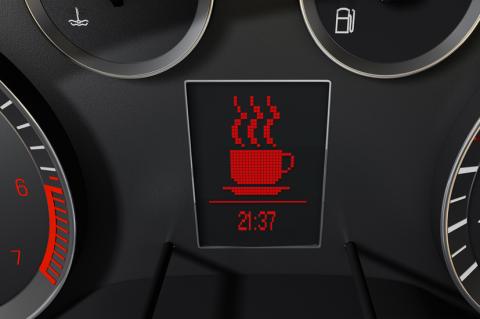
Nearly 680,000 – almost one-quarter – of the 2.95 million new cars registered in Germany last year can warn a tired driver before he or she causes an accident, according to an evaluation by Bosch. This makes driver drowsiness detection the driver assistance function most frequently installed in new cars.
Sometimes it's enough for the car to sound a warning signal and display a coffee cup in the dashboard to remind the driver to take a break after driving a long stretch. The evaluation was based on new car registration statistics for 2013.
“Driver assistance systems are an essential step on the way to vision zero, the goal of eradicating road fatalities,” said Gerhard Steiger, president of Bosch’s chassis systems control division.
This goal is also reflected in Euro NCap's latest rating scheme, which is pushing the adoption of predictive emergency braking systems and lane-keeping assistants. And it is having an effect on the production numbers for the sensors that are essential to the assistance systems.
“Bosch expects to sell over two million radar and video sensors in 2014, more than twice as many as last year,” said Steiger.
The six assistance systems used most often in new cars in order of increasing frequency: are adaptive cruise control (ACC) and ACC stop and go in 4% of new cars; road-sign recognition, also in 4%; lane assistance in 10%; automatic emergency braking in 11%; intelligent headlight control in 20%; and drowsiness detection in 23% of all new cars.
Tired, distracted drivers steer less precisely and have to make small corrections more often. Bosch's driver drowsiness detection system constantly analyses the driver's steering behaviour using a steering angle sensor or the electrical power steering to spot patterns typical of fatigue.
The system also registers any abrupt, small steering motions. Supplemented by further parameters – such as length of time already driven and time of day – the system can identify the warning signs of fatigue. It then sends an auditory or visual signal telling the driver to take a break before he or she begins to nod off.
