Over-the-air software management for automotive
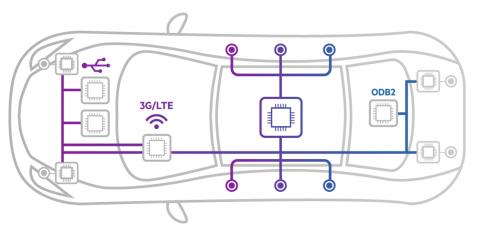
A software management platform that leverages Redbend’s core smart delta and virtualisation technologies is said to meet the growing needs of automotive OEMs and tier-ones as well as device manufacturers and device enhancers in the IoT and mobile markets. Called Redbend 10, the first public demonstration will be at next month’s Mobile World Congress in Barcelona.
The company’s smart delta technology delivers failsafe software and firmware updates. The virtualisation technology incorporated in Redbend 10 is used to run multiple, completely separate operating systems on one module or device. The two components create the core of a platform that enables manufacturers and service providers to keep devices updated, bug-free, relevant and secure regardless of complexity. The result is said to enable users to save time and costs, create new revenue opportunities and increase loyalty.
“Not only is the number of connected devices – from automobiles to appliances to wearables – growing, but also the software complexity within and between these devices,” said Oren Betzaleli, executive vice president at Redbend. “We have taken more than 15 years’ worth of experience in software management to develop one platform that answers 80 per cent of any device manufacturer’s software management needs and combined that with a scalable, flexible architecture that can be customised to meet the remaining 20 per cent unique requirements of customers in the three markets we serve – automotive, IoT and mobile.”
With Redbend 10, automotive OEMs can update all models of a vehicle in their entirety – from bumper to bumper – with one software update campaign. As software becomes a more crucial element of automobiles, so does the ability to model, view and manage all the software in the car. Now, all the components in vehicles needing an update, including those with infotainment systems, ECUs and telematics control units running dissimilar operating systems, with different levels of resources, from different suppliers and connected via different network types – Wifi, cellular, USB, ODB2 and in-vehicle busses – can be updated with one campaign.
“Redbend’s software update strategy is not only intended to add value to the vehicle after the purchase and fix bugs, it can also mitigate recalls, an increasing proportion of which are due to software,” said Roger Lanctot, associate director at Strategy Analytics.
It also brings client rule engine script control to the automotive industry. Prior to executing any update, each automotive OEM has a set of rules and conditions that need to be evaluated. Previously, specific OEM rules and conditions per vehicle model had to be hard-coded into the module. Now the OEM has the flexibility to modify the rules and conditions, saving time and money and ensuring updates get delivered quickly and efficiently.
IoT devices come with their own software management difficulties. Most often they are resource-constrained and have little memory, low processing power and low bandwidth. Redbend 10 has lightweight device management enabling manufacturers and service providers to deliver software and firmware updates over the air. This is in addition to the company’s existing OMA DM-based support to provision new devices, configure network settings, retrieve device information and deliver software and firmware updates over the air. For the first time, IoT device manufacturers can ensure devices remain relevant through efficient and reliable OTA updates and remote configuration.
The device analytics feature enables manufacturers, enhancers and service providers to gain visibility and insight over the performance and usage of device, network, services and applications. With the insights, device enhancers and service providers can increase revenue by improving and optimising devices, applications and services. Analytics also help reduce customer care costs with early problem identification and resolution.
Using an analytics dashboard, executives and administrators can view, analyse and share key performance metrics, filtering them by various dimensions such as model and operating system version. The anonymous, aggregated data collected from millions of devices can be further explored with a self-service business intelligence capability.
Acknowledging the increasing software complexity in today’s mobile devices and automotive components, Redbend 10 can manage large-scale images up to 8Gbyte needed for high-end mobile devices and map data to future-proof customer investments.
The dual-persona feature provides the capability to run two completely separate operating systems on a single smartphone, removing the need to compromise on privacy, security, user-experience or management. Based on successes with SK Telecom and Coolpad, the company added to its dual-persona offering with enhanced graphics performance, better memory use and a more streamlined user experience.
