Software Tools: Keeping on track
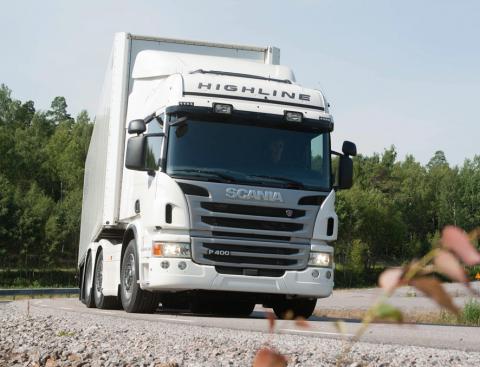
How version control helps Swedish lorry maker Scania keep track of software
Swedish company Scania is a major manufacturer of heavy lorries and buses, as well as diesel engines. With a history dating back to 1891 when it was founded in Malmö, the company today has production facilities in, as well as Sweden, Argentina, Brazil, France, Netherlands, Poland and Russia.
In common with many firms in the automotive business, the company depends on software to bring new products to market.
"Software is just as important as hardware in today's vehicles," said Lennart Kjellén, IT engineer at Scania. "With vehicles becoming increasingly sophisticated, there are more components and other elements to consider, especially with the amount of dedicated software involved in bringing a product to market – and then supporting it – rapidly increasing."
For example, Scania Connected Services, which facilitates continuous communications between vehicles and back-end systems, includes monitoring and reporting services, email and SMS reminders and alerts, fleet management portal, web server interfaces, remote diagnosis, and smartphone access to driver and vehicle data.
“One of the challenges of the automotive sector is the wide range software that we have to support: embedded software, hardware software, mobile apps, simulation models, web services and communications,” said Kjellén. “Plus, we are working with a wide range of platforms – for example Java and .Net – and a variety of different development tools. Also, as products may be in the marketplace for some years, we have to support them; this includes incremental feature releases, not just new developments."
To support this software development environment, the company, which manufactures lorries, buses, marine and industrial engines, plus other services to the vehicle industry, has long embraced a lean development processes and has recently adopted agile and continuous delivery to decrease time to market while ensuring product quality. A core part of this development environment is the use of version control to keep all the elements of software development projects on track.
However, back in 2008, Scania's R&D team at Södertälje, Sweden, was using a variety of version control tools, which created several issues: co-ordination across development teams was difficult; a single source of truth for digital assets was impossible due to the multiple tools in use; and integration with a wide variety of other tools and platforms, including gui and API support, wasn't possible. The administrative burden of managing multiple tools and vendors was high.
Scania needed a method that supported easier branching and merging – which enables developers to experiment without affecting the mainline of code – as well as a clear history of changes made. Scania chose Perforce Helix as its versioning platform for its scalability and ability to integrate with other tools in Scania's development environment, such as Jenkins, Jira and Visual Studio, .Net and Java.
There is also a flexible range of features within Helix that supports all kinds of users, regardless of their technical expertise. Plus, it was a good fit for Scania's agile and continuous delivery practices, providing rapid and high-volume version control.
"Perforce is at the heart of our delivery process," said Kjellén. "It was very important to us for Perforce Helix to integrate with all our other tools, such as Visual Studio, Eclipse, Jenkins and Jira."
Scania’s common versioning repository is at the heart of its development environment. This approach means users can track the current status of a project and access a history that supports compliance requirements. The company has also configured the common versioning repository so anyone can readily obtain the latest executable version of the project and see its current status.
"The common versioning repository helps us to ensure that, at any one time, we have a clear view of a releasable version of each product, with all versions of all software and other elements traceable and auditable,” said Kjellén. “The repository also assists our development teams to collaborate efficiently and be confident that they have full visibility of each project."
Essential to the software development processes is continuous improvement. All changes made to the system are checked into the Helix versioning repository. Every change to the system has the potential to be deployable and all team members are aware of that, so there is always a focus on high quality.
“We do, however, use branching for developers to experiment," said Kjellén.
Although the deployment pipeline is automated, the potential releasable version is divided into four stages: bronze, silver, gold and platinum. Once a project has gone through to platinum, it is deployable and stored for when the business is ready. Once it is considered ready, then deployment is an automated process.
The size of the repository varies, but it is typically an impressive 1.3Tbyte, with 1200 users submitting changes, which amounts to approximately 10,000 change lists within Helix each day.
"The common versioning repository means that all versions of our products are traceable and auditable,” said Kjellén. “This is key for complying with the various industry regulations and supporting rapid time to market, regardless of a project's size or complexity."
