Taking the smart city route
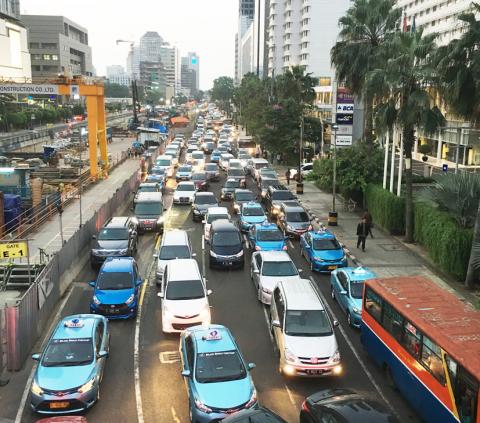
Steve Rogerson looks at Jakarta’s plans to become a smarter city
Anyone who spends any time in Jakarta will know it has serious infrastructure problems. Traffic jams are the norm, there are large holes in the pavement, street lighting does not exist in some areas, and public transport is slow and patchy at best.
However, the combination of an Indonesian president – Joko Widodo – who was once governor of Jakarta and the country being chosen to host next year’s Asian Games led to the establishment of an organisation called Jakarta Smart City in 2015. With around 80 employees, most of whom experts in their fields, and only six civil servants, the organisation has serious ambitions to transform the city.
“The aim is to use ICT to monitor, analyse and control various aspects of the city,” said Jakarta Smart City’s communications manager Daniel Giovanni. “We are focused on the smart city areas of environment, governance, living, economy, mobility and people.”
The aim, he said, was to create a healthy environment and build an integrated transport system.
“We want to see sustainable economic development and a high quality of life,” he said. “We want a government that listens, a system that connects and citizens that participate.”
And that has started. For example, a survey in December 2016 found that illegal parking was the second most reported complaint after illicit garbage disposal. The organisation is now taking steps to get illegal parking eliminated and at the same time reduce traffic congestion by creating large car parks around the edge of the city. There are also plans to introduce parking meters in the main streets and invest the revenue they generate into transportation.
“We are going to look at establishing a park-and-ride system,” said Giovanni. “We are looking for empty land that can be turned into parking spaces.”
Work on improving city lighting has started with 90,000 streetlights upgraded to LED in 2016, representing about two thirds of the total with the rest in the process of being upgraded this year. These are about 40 to 50 per cent more energy efficient, partly due to their variable light intensity. And a central station can monitor all the lights. Other projects include the tracking of heavy equipment and garbage trucks, ambulance tracking, city surveillance – around 6500 CCTVs had been installed by March this year – and air quality monitoring. There is a target in buildings to reduce energy consumption by 30 per cent by 2030 as well as cutting CO2 emissions and water consumption.
However, the best way of tackling the traffic problem is to get more people onto public transport. By analysing data from the public transport ticketing system, Jakarta Smart City was able to work out the typical full journeys that people took. This led to an increase in the number of fixed corridor bus routes from just 13 to about 80.
“These new corridors reflect how people use tickets,” said Giovanni. “We looked at routes where people changed buses lots of times and made them single routes. This has increased the number of people using public transport.”
How that has impacted traffic flow is hard to tell yet as the past two years have seen large investments in infrastructure that has led to lane and road closures. Only when that has finished will the full benefits be able to be realised.
This investment has included more under and over passes to reduce the number of intersections between roads and between road and rail. There is also now one bus-only route though Giovanni thinks that there may not be any more. The body is also looking at the first and last kilometre of journeys with minivans that can drive round residential areas to take people to the nearest bus stop. Use of this would be included in the price of a season ticket.
More ambitious, and a result of the impending Asian Games, is a light rail transit (LRT) being built and due to be opened next year in time for the games. At the same time a mass rapid transport (MRT) network is being built but that is not due to be ready until early 2019.
“We have a lot of people who use private cars,” said Giovanni, “so we have to focus on that to get them onto public transport. We want to reduce pollution, so we now have car-free days on some major routes on Sundays.”
To make the city pedestrian friendly – it is very unfriendly at the moment – there are plans to increase the size of pavements.
“Rather than pedestrian-only areas we are looking at making the roads more pedestrian friendly,” he said.
