Transport pilot warns drivers about slippery roads
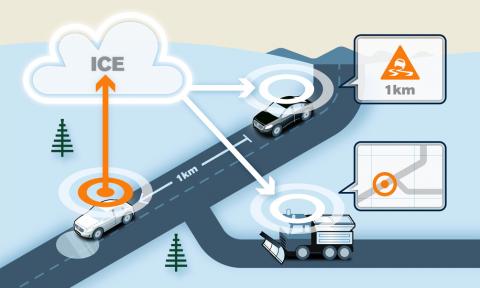
The Trafikverket Swedish transport administration, the Statens Vegvesen Norwegian public roads administration and Volvo Cars have joined forces in a pilot project in which road friction information from individual cars is shared within a cloud-based system.
The real-time data about slippery patches on the road are used to warn vehicles nearby, at the same time as they contribute to making winter road maintenance more efficient.
“The pilot is one of the first practical examples of the way communications between vehicles over the mobile network enable vehicles to speak to each other and with the traffic environment,” said Erik Israelsson, project leader at Volvo Cars. “This can contribute to making traffic safer. We have 50 test cars on the roads, and next winter the fleet will grow considerably. Our aim is to make the technology available for our customers within a few years.”
When the test car detects an icy or slippery road patch, the information is transmitted to a database via the mobile phone network. An instant warning is transmitted to other vehicles that are approaching the slippery area, making it possible for the drivers to take immediate action to avoid a critical situation.
A slippery road warning on the instrument cluster alerts the driver. The application in the vehicle will be designed to adapt the driver warning to match the severity level based on the vehicle speed and the present road conditions.
The information about the icy patch is also sent to the road administrator as a complement to existing measurement stations along the road. The data can help the road administrator better plan and execute winter road maintenance and quickly address changed conditions.
“When the road administrator has access to information from a large number of cars, the data can be used to make winter road maintenance more efficient,” said Israelsson. “The information could help to improve road safety further for all road users. This could also reduce the use of salt when not needed and minimise the environmental impact.”
The information shared with the road administrator will not include data of unique vehicles. The aggregated information is used solely to describe the present status of the road network.
“This is only the beginning,” said Israelsson. “In the future we will have increased exchange of vital information between vehicles. There is considerable potential in this area, including safer traffic, a more comfortable drive and an improved traffic flow. The strategic focus on connectivity within our new scalable product architecture paves the way for more cloud-based safety solutions. This will bring us closer to our safety vision that nobody should die or suffer serious injuries in a new Volvo car by the year 2020.”
