IAR tools help students build hydrogen-powered race car
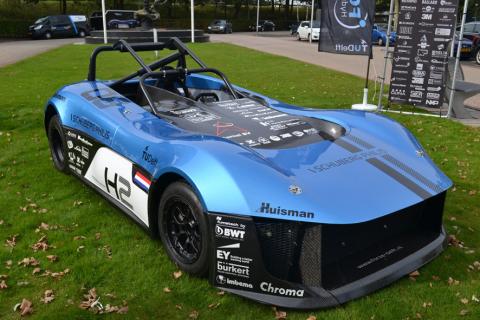
Tools from IAR Systems have helped Dutch students develop a hydrogen-powered racing car. IAR Embedded Workbench was used by students at Delft University of Technology in the Netherlands.
Forze, a student foundation at the university, is developing hydrogen-powered racing cars. Thanks to its code optimisations and easy-to-use interface, IAR Embedded Workbench helped the team accelerate the development cycle and to get the cars into production faster.
Forze is a group of over 50 students at the university. The team focuses on the development and promotion of sustainable technology and, since 2008, has built six hydrogen fuel cell vehicles. The entire project is carried out by team members who work voluntarily.
Earlier this year, their latest car Forze VI broke the lap record for fuel cell vehicles on the Nordschleife of the Nürburgring in Germany. Never before has a racing car with a hydrogen fuel cell completed the track so fast.
“Thanks to our sponsors, we are able to let the world know about the great potential of this hydrogen technology and make a clear statement about its place in the automotive industry,” said Mart van Rijsingen, chief of electronics and bodywork for Forze. “IAR Embedded Workbench has an intuitive and very user-friendly IDE and it has helped us a lot in structuring our software and filtering errors out. The included debugger performs code checks in a very powerful way to make sure the code is doing what we expect it to do.”
The tools help companies and organisations from all parts of the world bring products to the market easier, cheaper and faster. The complete compiler and debugger toolchain of IAR Embedded Workbench provides the embedded industry with device support, including more than 10,000 devices from all major semiconductor vendors.
