Recruitment & Training: Talent scouting
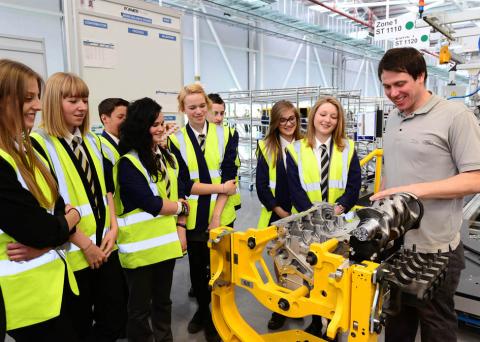
Will Blohm from Spencer Ogden looks at how automotive hiring is turning electric
The automotive industry as a whole is ageing and lacking staff with key skillsets, and while electrical and telematics engineers have been important for a while, they’ve never been as important as they are now. Partly because the possible end of fossil fuels has forced a shift in mindset and has sparked a discussion about alternative sources of energy for our vehicles, yet also because, naturally, the computer chip is replacing the spanner, making components faster, more reliable, more intelligent and cheaper.
From the braking systems to the windows and the parking sensors, pretty much all elements of a car now rely on electrical engineering. Work has also already begun on automating manual transmission, and the advent of the IoT is already hastening the inevitable deployment of self-driving cars.
It’s estimated that, by 2030, vehicles with some kind of electric powertrain will comprise 65 per cent of the market. What’s more, talk of electrically powered automobiles is far from new: Tesla Motors has successfully launched several different lines of high-end, battery-powered sports cars over its thirteen-year history; established players such as Chevrolet and BMW are actively manufacturing plug-in hybrids; and the Toyota Prius turns twenty in 2017.
But if the industry doesn’t have the right skills, this transition will be harder than it needs to be – and on that count, there are already severe warning signs. Some of the issues are more longstanding: the automotive market is unable to tap into industries such as oil and gas, which is rather less fast-paced and many skills simply won’t translate.
Other issues, however, have made themselves known more recently. In the USA, it was reported last year that the total number of people working as electric engineers declined by 29,000; for the year before, the figure stood at around 35,000. In the UK, automotive engineering on the whole is in decline; at the start of 2016, over 5000 industry vacancies were unfilled.
To secure the electrical skills they need, firms need to adjust their approach to attracting, hiring and training talent.
Skills shortage
Before thinking about answers, it’s necessary to diagnose the problem fully and properly. And although the need for electrical engineering skills may be becoming increasingly pressing, the underlying issues are old indeed.
For those running a smaller automotive firm or a start-up revolutionising automotive components and features, competing with Ford, General Motors, Jaguar, BMW or any other international corporate monolith won’t be a new experience. But as the need for electrical engineers has only increased, these large, established players are tightening their grip on the job market.
Certainly, they’ve known this would happen for a while now. Last year, GM released a list of the most coveted jobs in the automotive industry, and electrical engineer was number one with a bullet. Crucially, this foreknowledge is translating to action. They’ve always been able to pay higher salaries and rely on a degree of brand recognition, but an increase in demand and a dwindling pool of talent have compelled them to take more serious action. In the UK, for example, Jaguar snaps up newly qualified professionals through partnerships with well-regarded universities such as Cambridge and Warwick.
With smaller budgets, limited name recognition and formidable opponents, it can be easy to think that smaller companies will always end up second in the pursuit of electrical engineering talent. That said, there are steps that can be taken to stay competitive.
Electric dreams
Stem (science, technology, engineering and mathematics) skills shortages can be fairly attributed to wider issues with stem education. By the time a bright young mind understands the benefits of a career in electrical engineering, it may well seem too late to begin one.
Though a student who develops a late interest in engineering is well-served at a US university – where majors aren’t chosen until their second year – the UK requires subjects to be dropped from the A-level stage and is therefore rather less forgiving. The only real corrective is for the UK education system to make the profession and the subjects more attractive.
Companies can do their part by offering work experience and placement opportunities, but it’s a long-term problem, and one that will only be solved when schools begin to offer greater exposure to engineering.
Of course, it’s not really a smaller company’s responsibility to reshape the education system, so it’s worth focusing on what they can do in the short term. Fortunately, there are more options than they might think.
While they can’t necessarily compete with General Motors on salary, they may be able to compete on value and experience. Large, multinational organisations tend to be dominated by entrenched structures and hierarchies of progression: a young, promising graduate with qualifications and ability may well find themselves undertaking menial tasks and busywork for their first year of service.
Being in charge of a smaller firm gives some distinct advantages: first and foremost, that they likely can’t afford to employ electrical engineers who aren’t doing work related to electrical engineering. From the moment they arrive, they’ll be contributing substantively to important projects as a respected member of the team.
So the first thing to do in terms of gaining ground on more established competition is tell them about it. Sell them on the company’s vision, and on how they can play an essential role in bringing it to life. Promise these hires that, whatever they end up working on, they’ll never be bored, their creativity will be put to good use, and they’ll have plenty of opportunities for training and progression.
Of course, that’s not going to be enough on its own, so companies need to make sure they’ve cultivated an organisational culture that’s appealing to the new generation of electrical engineers. This isn’t entirely a matter of offering the best perks – nobody is ever as impressed with ideas such as Disco Friday as the people who come up with them – as much as catering to their preferred workstyle.
If they want to work flexible hours, or from remote locations, allow them to do so – and implement an IT infrastructure that allows them to do so. Cloud technology makes it possible to access a workstation from anywhere, and at a relatively low cost: take advantage of it.
Finally, there’s no reason such companies can’t take a leaf out of their competitors’ books and create their own engineers. Partnering with universities is one option, but if they can afford to subsidise the initial cost of a one-year master’s degree (two years part time), they’ll benefit from a regular stream of highly motivated, highly qualified, forward-looking employees.
New era
Mechanical engineering has been around since the 18th century, and it’s not yet obsolete. The story of the past two centuries has, in some respect, been the story of electricity – and it’s a story that’s a long way from its conclusion. In the automotive industry, its takeover is nearing completion: there are electrical locking systems, GPS and push to start, not to mention steering wheels without hoses, pumps or hydraulic fluid. There are electrically powered vehicles and telematics systems will soon be sophisticated enough to replace the human driver.
How a company chooses to deal with a skills shortage is ultimately up to them: they can take the initiative and close the gap between the business and its competitors, or risk losing out on talent in the short and long term.
Will Blohm is head of automotive at Spencer Ogden
