Vehicle Networks: Optical versus copper
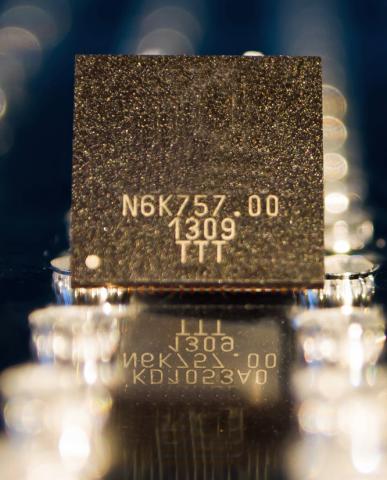
Carlos Pardo from KDPOF puts forward the benefits of plastic optical fibre over copper
Various studies and market monitoring research foresee that, as with infotainment systems, adas is on the verge of becoming an integral part of the vehicle, interfacing with many different clusters of electric and electronic systems in the car. Corresponding high-speed networks are demanding one gigabit and beyond.
Therefore, selecting the right physical layer for future data buses in cars is of utmost importance: it has implications for cost and weight, key factors in today’s car models. Selecting the best technology is a difficult engineering task, as it requires a delicate balance between preconditions such as speed, cost and robustness against electromagnetic noise.
There have traditionally been two main alternatives for physical layers in automotive applications, optical and copper-based, with copper coming in the form of UTP (unshielded twisted pair), STP (shielded twisted pair) or coaxial cables.
Traditional copper-based networks are the default choice for new architectures because of the risks and challenges of adopting new physical media. But taking a closer look, copper suffers from electromagnetic emissions, immunity and lack of galvanic isolation, not to mention higher weight and unstable cost.
Cost, EMC and weight
Plastic optical fibre (POF), however, fulfils all these conflicting demands, thanks to gigabit capabilities over an optical, low cost and already qualified transmission media. It is cheaper than STP; the cost is similar to coax. Future POF costs are much more predictable and bounded than copper based designs. POF is immune to electrical noise, which is not the case with UTP. As an optical fibre with a large core, it is able to withstand vibrations and misalignments much better than other optical or copper alternatives. POF is basically made of plastic, so its weight is much lower than the other alternatives.
Finally, POF can withstand harsh environments and tolerate conditions such as routing across the engine compartment with temperatures as high as +105˚C. POF cables are very reliable compared to GoF, coax and STP. Their good bending performance starts at a radius of 10mm, and gigabit transmission distances of up to 50m are possible.
Flexibility and reliability
POF systems are well-proven in the automotive market. They have been around in several communications standards for years now. Names such as Flexray, Byteflight and Most are well established in the industry. This ensures a wide market of devices and suppliers that comply with the strict requirements. As a plastic, wide diameter fibre, POF is cheap to manufacture and install. It doesn’t require any special equipment or professional qualification, and harness manufacturing processes don’t need to be changed.
The higher bandwidth demands required by video-based sensors are achievable with POF technology, which enables the cost-effective and reliable installation of high-definition rear view cameras, multi-camera 360˚ view, parking assist, wing mirror replacement, backseat monitoring and night vision.
Standardisation
POF gigabit technology has been standardised through the German VDE-DKE and Etsi. Most recently, the IEEE has published the IEEE 802.3bv standard amendment for gigabit Ethernet over POF, which defines 1000baseRH, a physical layer specifications and management parameters for automotive, industrial and home networking applications.
According to the IEEE, POF provides unique capabilities for these applications where long link lengths aren’t required. IEEE 802.3bv provides a robust and reliable media option for Ethernet automotive networks. As an alternative transmission medium, the standard is also applicable to harsh, electrically noisy environments such as industrial automation islands and other applications with similar requirements. POF gigabit technology is now in the process of being normalised at the WW level through the ISO organisation.
Carlos Pardo is CEO and co-founder of KDPOF
