NVidia unveils mobile processor for automotive applications
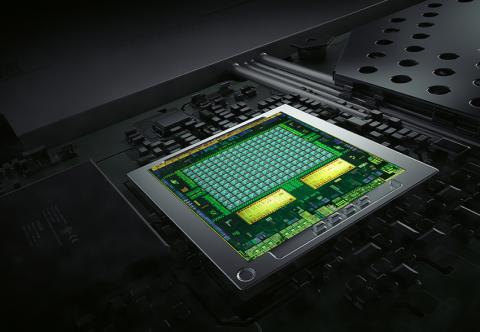
NVidia’s latest mobile processor – the Tegra K1 – is an automotive-grade version of the same GPU that powers the world’s ten most energy-efficient supercomputers; the company believes it will help self-driving cars advance into the mass market.
The K1 can drive camera-based, advanced driver assistance systems (adas), such as pedestrian detection, blind-spot monitoring, lane-departure warning and street sign recognition, and can also monitor driver alertness via a dashboard-mounted camera. It can also create razor-sharp, photo-real 3D graphics.
Using the company’s Material Definition Language – which simulates how light reflects and refracts off of actual materials – digital instrument clusters and infotainment systems can be customised with virtual materials.
The processor has a quad-core CPU and a 192-core GPU using the NVidia Kepler architecture, the basis for the company’s range of GPUs.
“To process the steady deluge of sensor and camera data required by a self-driving car, NVidia is bringing highly energy-efficient supercomputer technology inside the vehicle,” said Taner Ozcelik, vice president and general manager of NVidia’s automotive business. “Tegra K1 solves this by providing ten times the computing power of previous mobile processors without consuming additional energy.”
The processor is the first mobile processor to support Cuda – the parallel computing platform at the heart of modern computer vision. In its automotive-grade form, this chip is hardened to withstand a wider range of temperatures and withstand harsher operating conditions.
“Audi and NVidia have a long, deep partnership, in which we’ve utilised three generations of Tegra to bring industry-leading capabilities to the instrument cluster, infotainment and rear-seat entertainment systems,” said Ricky Hudi, chief executive engineer of electrics and electronics at Audi. “Tegra K1 opens a new chapter for Audi to deliver revolutionary supercomputing advances to the car, paving the way to piloted driving experiences.”
Adas products in the market are based mainly on proprietary processors. The K1 moves beyond this limitation by providing an open, scalable platform. It is fully programmable, so it can be enhanced via over-the-air software updates that support new functionalities as they become available from car makers.
“Advanced computational technologies are the foundation for turning automobiles into the most innovative, capable and desirable mobile devices in the future,” said Thilo Koslowski, vice president and lead automotive analyst at market watcher Gartner. “By offering over-the-air upgradeability of these technologies, automakers can improve existing in-vehicle features and offer new ones over the course of the vehicle lifecycle.”
The product will be available to automotive OEMs and tier-one suppliers as a visual computing module (VCM). The VCM delivers a full computer system for the vehicle, capable of running various operating systems including QNX, Android, Linux and Windows.
The Tegra VCM allows in-vehicle systems to be easily upgraded as newer hardware becomes available, closing the gap between the rapid pace of innovation in the consumer electronics space and the longer development lifecycles typically experienced in the automotive industry.
“NVidia’s modular approach enables automakers to fast track development with breakthrough technologies like the Tegra K1, without having to start from scratch,” said Roger Lanctot, associate director within the global automotive practice at Strategy Analytics.
