Lytx uses AI to spot distracted drivers
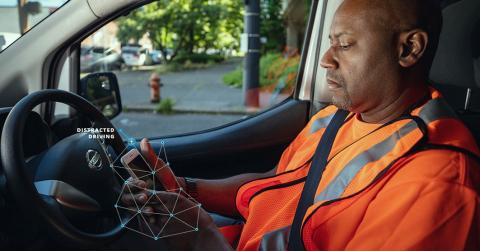
Machine vision and artificial intelligence technology from Lytx can spot if a driver is distracted by, say, using a mobile phone while at the wheel.
Around a third of fatal accidents are caused by distracted driving. To help combat this and alleviate other high-risk behaviour, UK firm Lytx, a provider of video telematics for commercial, public sector and field service fleets, has enhanced its machine vision and artificial intelligence (MV+AI) technology to provide near real-time insight into risky behaviour, such as using a handheld device while driving.
While traditional software, that identifies G-force triggers, can only be acted on once the incident has happened, this technology acts like a driver's sixth sense, constantly monitoring the road and the driver, detecting risky driving, and triggering short video clips to provide insight into what's really going on inside the vehicle.
The risk detection technology will be included as part of the firm’s Driver Safety Suite and will initially include four MV+AI triggers: handheld device, no seatbelt, food or drink, and driver smoking. Fleet managers can couple this with Lytx's fleet tracking service to provide a complete and integrated package for fleets looking to optimise their vehicle technology with a single vendor.
Using these technologies to improve safety, service and efficiency in fleets is more important than ever, particularly as the industry works towards DVS direct vision standard compliance.
"Our next-generation technology equips fleet managers with the tools to proactively tackle some of the toughest problems facing their fleets and drivers, such as distracted driving,” said Damian Penney, vice president for Lytx in Europe. “This new set of triggers will help managers identify even more behaviour that could lead to potentially dangerous situations. Our customers are looking to MV+AI technology to help them prevent high-risk behaviour from becoming road incidents, the implications of which are huge from both a personal safety and a financial perspective. The volume and quality of our data means our MV+AI is unrivalled in its accuracy, with our enhanced Driver Safety Suite able to deliver absolute peace of mind."
Lytx claims better than 95% accuracy across more than 60 risky types of driving behaviour. In 2019, Lytx labelled over 1.75 million minutes of video with mobile phone use, driver unbelted, smoking, and food and drink behaviour.
With 200 billion kilometres of driving data analysed and 100,000 risky driving events captured daily, Lytx says it is uniquely positioned to develop accurate MV+AI-powered technologies for detecting risk. This deep well of high-quality driving data, validated by professionally trained analysts, ensure a high level of precision in training Lytx's AI algorithms to understand which data points are most important in building an accurate picture of risk. The programme delivers prescriptive and customised coaching insights to fleet managers.
These triggers monitor for driving behaviour patterns and select short video highlights to be analysed and screened by Lytx's artificial intelligence for accuracy. The validated video clips are then automatically sent via a 4G LTE cellular connection from the vehicle to the cloud, where they may be viewed via a Lytx account from any internet-connected computer, smartphone or tablet.
Fleet managers and drivers then have the opportunity to view these video clips using Lytx's proprietary coaching workflow. This programme can help change driving behaviour and is associated with up to 50% reduction in collisions and 80% reduction in associated claims costs.
Lytx provides video telematics, analytics, safety and productivity products for commercial, public sector and field service fleets. The company's driver safety programme, powered by the DriveCam event recorder, can help save lives and reduce risk. Lytx says it harnesses the power of video to see what happened in the past, manage operations more efficiently in the present and improve driver behaviour to change the future.
