Ford steering technology to make vehicles easier to manoeuvre
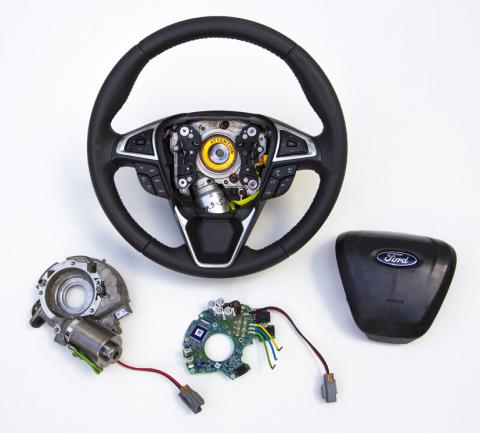
Steering technology that will help make vehicles easier to manoeuvre at low speeds and in tight spaces while at higher speeds making the vehicle more agile and fun to drive is being introduced by Ford Motor.
Called adaptive steering, it changes the ratio between the driver’s actions at the steering wheel – the number of turns – and how much the front wheels turn. In traditional vehicles, this is a fixed steering ratio. With adaptive steering, the steering ratio continually changes with vehicle speed, optimising the steering response in all conditions.
The system uses a precision-controlled actuator placed inside the steering wheel, and requires no change to a vehicle’s traditional steering system. The actuator – an electric motor and gearing system – can essentially add to or subtract from a driver’s steering inputs. The result is a better driving experience at all speeds, regardless of vehicle size or class.
“First and foremost, all Ford Motor products have to offer a great driving experience,” said Raj Nair, Ford group vice president for global product development. “This new steering technology can make any vehicle easier to manoeuvre and more fun to drive.”
At lower speeds, such as when pulling into a parking space or manoeuvring in tight quarters, the system makes the vehicle more agile and easier to turn, as it dials more steering into the road wheel. Each low-speed manoeuvre requires less turning of the steering wheel.
At highway speeds, the system further optimises steering response, enabling the vehicle to react more smoothly and precisely to driver input to make the journey more enjoyable.
Adaptive steering will be available on select vehicles beginning next year. The system was developed for production by Ford in collaboration with Takata, a supplier of automotive steering and safety systems.
