Telematics: Empowering the driver
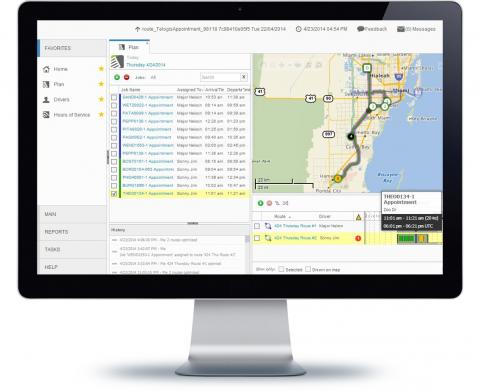
What was once impossible is now – through connectivity – the economic and commercial engine of today, according to Tim Taylor of Telogis
Five or ten years ago, telematics was based on enterprise data delivered to management via the web and was less concerned with engaging the driver. Driver connectedness with the enterprise is integral to the next wave of telematics. A business is only as good as the person in the field that represents it – and connecting the driver to the mission of the company through their mobile device is one way to do that.
Mobile products that run on a driver’s smartphone can present a driver scorecard, ranking performance compared with others in the company based on specific driving behaviours and metrics. This engages drivers in a positive way to improve performance. During downtime, drivers can review tips, driving tutorials and specialised training aimed at making them safer drivers and empowering them with skills to climb the leaderboard. By making driver safety a game, it fosters friendly competition and a team spirit that also has practical results in operation: improved safety and lower fuel costs.
A major utility in north-eastern USA has reported that since implementing a driver scorecard system, drivers are “climbing over each other to get to the top”, and the company has recorded quarter-on-quarter reductions in fuel use, idle time and hard-braking events – all safety-related metrics monitored by telematics software. In addition to those immediate cost-saving measures, a scorecard user can save significant money as it relates to safety: lower insurance rates, lower damage or replacement costs, and reduced or eliminated downtime associated with damaged vehicles and assets.
We are at a stage now where the information coming off the lorry or out of the back office, transmitted directly to a worker’s mobile device, really helps drive efficiency and employee satisfaction.
Another way it does this is by helping that mobile employee make informed decisions. If a driver is made aware that a loading bay will not be available at the delivery they are currently heading to, they can leverage their connected route planning, work order management and lorry-specific navigation technologies to determine more productive alternatives than sitting at that customer’s facility for two hours waiting.
This is ultimately the promise of the connected mobile ecosystem: empowering people throughout the organisation to make better decisions using the data provided to them at the moment of need.
Intelligent vehicle
The work vehicle represents a nerve centre that can be tapped into for a great deal of information. Through the combination of telematics, work order management and route optimisation, vehicles can be tagged with the tools contained in each vehicle, as well as the skillset of each driver. In a work environment where the need to respond to ever-changing customer demand is critical, this ability helps significantly improve response and fleet efficiency. A contractor, for instance, may have three vehicles closer to a call for emergency service, but those lorries may not have the tools required to perform the job. By intelligently selecting and rerouting a capable vehicle and driver, it ensures customer satisfaction and the most efficient use of resources in the field.
For large fleets that feature many and varying vehicles, telematics provides a real-time and historical snapshot of asset utilisation. One division of the company may need to purchase a new lorry outfitted with a specific tool or function, but a utilisation report may identify a suitable vehicle that is under-used elsewhere within the business. This intelligent and enterprise-wide view into asset utilisation helps keep down owning and operating costs, and allows companies to make smarter buying and leasing decisions.
One of the simplest functions of telematics is the ability to monitor – via a central programme – the operating conditions and maintenance demands of a fleet of vehicles. This helps fleet managers schedule maintenance in a manner that has minimal impact on productive scheduling, and identify issues with vehicles that need attention before they develop into a maintenance event requiring downtime or repair.
And, finally, the simplest task of all: location. Communicating where a lorry is, where it has been and how long it was there helps in many ways: lone worker, road and bridge compliance, theft recovery, fuel card management and identifying unauthorised use – all possible with an intelligent, connected vehicle.
Evolving plan
Businesses can control their own destiny through coordinated use of navigation, dispatch, work order management and route optimisation programmes. Put simply, these technologies take the plan or desired production for the day, compare that to the available assets in the field, and create a plan that is going to allow those goals to be achieved by driving the fewest kilometres. This saves fuel, reduces wear and tear on the vehicle, and puts the least amount of strain on the driver. It also gives the company a realistic assessment of how the fleet is actually performing compared with the plan. Under favourable conditions, these technologies can reduce total kilometres driven by 15 to 20% and help increase productivity.
Dynamic situations, such as storm response, are also revolutionising how fleets plan and carry out response actions in real time. Through visibility sharing, technologies utilities and their partner contractors can share a view of all assets and resources in the field. This allows numerous, independent fleets of vehicles all to be accounted for in a single system and coordinate response together to ensure the most efficient and effective deployment of resources. This shared view across fleets is tailor-made for the utility industry, but also opens doors in other applications for all users to share fleet information for the benefit of all.
Connected customer
All businesses are based on one thing: customer demand. Without it, a business doesn’t have a purpose – therefore, there may be no more important factor than customer satisfaction. The connected mobile ecosystem, as made possible through location intelligence technologies, achieves this in a number of ways. For users in the trucking industry, it may mean granting a customer visibility into the location and estimated arrival time of a lorry, using similar technology as outlined in the storm response example. The customer then may be able to schedule loading bay space more efficiently for that incoming lorry, and help ensure that the driver and the load are back on the road as quickly and efficiently as possible – satisfying both parties.
In the world of field service, connectedness allows for a whole new level of customer interaction. Integrated work order management, routing and scheduling problems empower the customer to schedule a service time that works best for them but also is optimised for the service provider based on current routes, resources and plans. This ensures a happy customer and a profitable service visit. Integrated systems that call a customer in advance of a vehicle’s ETA and confirms that the customer will be there help cut down on no-shows and the associated drags on efficiency – rescheduling, lost mileage, wear and tear, and so on.
Intelligent product
The connected mobile ecosystem is not limited to the driver, the vehicle, the plan or the customer. Through a similar device as the one outfitted on a lorry, installed products can be tracked to improve customer service further and keep operational costs down, adding another dynamic component to the connected enterprise and customer service. Take, as an example, a commercial heating and air conditioning system. There are three phases of service, and each carries varied costs. Reactive maintenance may cost the contractor so much in operating costs. A planned maintenance programme reduces maintenance costs because it allows the contractor to be proactive and work in maintenance intelligently based on crew location and plans, optimised through work order management and route optimisation.
Outfitting that installed system with a tracking device of its own and having it send the installer or maintenance contractor information on performance and capacity in real time allows that contractor to respond more intelligently. This type of proactive situation reduces cost even further because technicians aren’t going out to perform maintenance on products that don’t need it yet, and are addressing issues before a significant failure or outage occurs. This proactive method also increases the contractor’s value proposition and allows them to differentiate their entire product based on that level of service.
Transformed fleet
The examples outlined represent the best of what many in the industry are doing right now – but the beauty of the connected mobile ecosystem is it can be engineered to fit the needs of each individual business or enterprise. The results achieved for most businesses, however, will be the same: a greener, more cost-efficient fleet (fuel savings, reduced idling), a safer fleet (improved driving behaviour, fewer accidents and tickets), improved customer satisfaction, less wear and tear on vehicles (and their drivers), improved employee satisfaction and decision making, and an overall greater utilisation of the assets and resources at hand.
Tim Taylor is chief success officer at Telogis
