In-Vehicle Computers: Staying safe
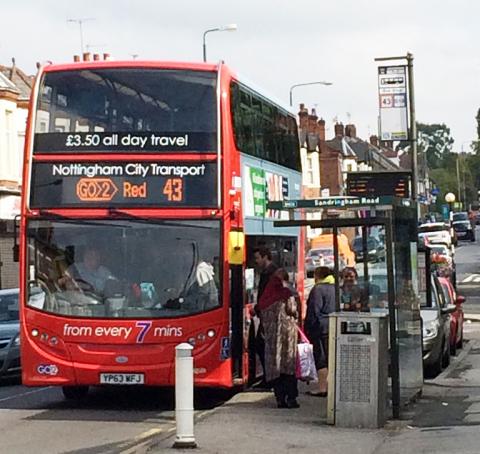
Conant Ho from Advantech shows how in-vehicle video surveillance can boost public safety
Terrorism, crime and vandalism targeting public transit systems, such as the London bombings in July 2005 and killings on school buses and transit lines in recent years, have highlighted the importance of in-vehicle video surveillance. From London to Paris to Taipei, and in many other metropolitan areas around the world, an increasing number of IP surveillance systems have been installed on buses and other rolling stock to implement recording of images both on board and outside the vehicles. The continually declining price of IP (network-based) video surveillance equipment and improved network bandwidth have increased the affordability of the latest technology and further fuelled market growth.
A typical vehicle surveillance scenario – in a bus, for example – includes two in-vehicle cameras recording interior views of the passenger compartment, and another two cameras helping eliminate external blind spots.
Vehicle surveillance serves multiple purposes: it helps protect passengers and drivers on board as well as pedestrians and other drivers on the road. It also helps to enforce driver and rider regulations as people know they’re being watched and are more likely to follow the rules. It can help fix responsibility after an event, and even reduces frivolous claims.
Moreover, IP-based video surveillance of full-HD quality can enable valuable IVA (intelligent video analytics) features, such as facial detection, demographics, passenger counting, forbidden zone and density analysis. The analysis functions sometimes can produce added business values – for example, passenger analysis can help determine media display content for in-vehicle signage during specific hours; content can be fine-tuned to impress a target audience.
That is why IP surveillance is recommended for in-vehicle applications: it delivers many advantages over traditional closed-circuit television (CCTV), including easier and less expensive installation through PoE (power over Ethernet), higher image quality that enables more effective IVA, real-time remote monitoring and control, convenient video data search and retrieval, and higher software compatibility.
Requirements
In the past, a traditional CCTV was considerably cheaper than an IP camera, but today the price gap has narrowed. Compared with IP surveillance, analogue cameras deliver poor image quality, which makes implementing IVA difficult. CCTV is also awkward when it comes to VMS compatibility due to the lack of standard encoding and decoding protocols.
IP cameras, on the contrary, can be easily installed simply via an Ethernet cable connection, and follow the industrial communications standard, ONVIF, that ensures interoperability between IP-based physical security products and provides much higher compatibility with software products developed by various companies.
Of course, the fiscal reality for emerging countries has to be considered, which means due to stringent budgets some still need to opt for CCTV; it is best if an in-vehicle computer for video surveillance can provide both IP and CCTV support, as a hybrid.
Wireless
Wireless communications are needed between the vehicle and control centre so instant response is possible – such as for emergency dispatch of service personnel to take care of a breakdown. Adapting to varying mobile communications infrastructures at different locations, diverse and flexible wireless communications including Wifi, 3G or LTE need to be provided. An emergency call system can be implemented as well, with an additional voice module.
However, due to the limits of wireless bandwidth, video data transmission in real time must be in a lower definition format, with the copy and storage of full-HD quality raw data to the database made only after the bus returns to the terminal; this can be done automatically via software-enabled network transmission, or by simply retrieving the storage device. Therefore HDD hot swappability is also an important design consideration for in-vehicle systems; it delivers convenient data retrieval and system reliability.
GPS navigation is also a crucial component for in-vehicle surveillance systems; it provides real-time position tracking of the vehicles and enables more well-informed and efficient fleet management, including instant reactions to incidents. The acquired data can also be used for developing value-added applications such as a bus arrival time prediction system, with the information displayed on signage at each bus stop.
The Can bus is used to connect the on-board video surveillance system and the vehicle ECU as well as a video event data recorder (VEDR) to provide vehicle status information such as driving speed, gear use, braking, fuel usage and so on. Such information can be valuable in determining responsibility or liability in traffic incidents. Some vehicle status data can be selectively incorporated into video and shown on-screen along with timeline information.
A G sensor or accelerometer can be used to detect and monitor acceleration, vibration and shock in the automotive environment, which in turn will assist in incident analysis and responsibility clarification – for example, in crash investigations or examinations of driving behaviours.
Today’s IP cameras are usually enabled and powered over an RJ-45 Ethernet line connection. An in-vehicle networked video recorder typically has four default channels for connecting four IP cameras. However, additional lan ports should be provided that let the system scale easily; with extra ports, the user can connect via a PoE switch to add additional cameras, depending on application requirements, system performance and bandwidth.
Experienced in-vehicle computer system suppliers provide not only hardware, but an integrated hardware, firmware and software package with rich SDK and APIs that exempt system integrators from the complex programming required to make low-level system calls; this allows them to develop intended applications and functions with great ease and faster time-to-market. Remote control software is convenient for developing in-vehicle systems. And advanced applications such as VMS or IVA can either be independently developed by system integrators or purchased from a third party.
In vehicle
The automotive environment is beset by electrical hazards, shock and vibration, dust, and sometimes temperature extremes. To ensure safety and reliability, in-vehicle computers require special designs to combat these evils, and these design features distinguish them from standard IT products. The most important of all is tackling power challenges.
In-vehicle electronics are vulnerable to impacts from so-called dirty power. These include power surges or voltage spikes caused by a battery disconnect, a jump start, a cold crank, or switching transients from other on-board devices or subsystems. Transient voltage can cause severe damage and failure of electrical devices. Therefore, transient protection at the hardware design level and power ignition management at the firmware level are critical for in-vehicle video surveillance systems.
Tolerance for a wide range of DC inputs is also important to ease installation of in-vehicle devices in 12 and 24V DC battery systems, and to enhance resistance against cold crank, jump start and load dump conditions.
To ensure the power design of electronic devices is robust enough to survive the hazards and trials of automotive environments, international standards with set test methodologies have been defined for certifying in-vehicle electronic appliances, such as E-mark and ISO-7637-2.
The automotive environment is, by nature, subject to constant vibration and occasional shock. Therefore, special mechanical designs are necessary to protect electronic components, such as the use of durable and heat-resistant adhesives, screws and dampers that reinforce ruggedisation.
Due to economic spatial considerations, the industrial in-vehicle computer is more likely to be installed in the undercarriage rather than seated in a cosy, air-conditioned corner. Therefore, special mechanical designs, including the arrangement of components in the chassis to allow for better heat dissipation, are important for strengthening system reliability.
However, as the use of fans could draw in dust and threaten system lifespan, fanless designs are preferred for IPCs (industrial PCs) used in vehicles. Striking the delicate balance between system performance and thermal design poses challenges for IPC makers.
IPCs for vehicle applications are also prone to electromagnetic disturbances from other in-vehicle devices and special protection is needed to ensure system reliability and longevity. IEC-61000 contains a series of standards for verifying EMC capabilities.
Optically isolated IO designs help to eliminate noise pickup associated with PC power supplies and ground connections, thus protecting the printed circuit boards inside from damage.
Conant Ho is product manager for Advantech’s embedded computing group
