V2X Communications: Smart parking
A look at how Bosch is helping drivers find the perfect parking space
The perfect parking space is situated close to where a driver wants to go, offers enough space for their car and is unoccupied. To find that parking space, however, can be extremely frustrating – especially in urban areas.
In Germany, the average search for a suitable free parking space takes ten minutes. According to a survey conducted by the European market leader in parking lot management, people drive up to 4.5km when looking for somewhere to park, resulting in vehicle costs of €1.35 per search.
To help this problem, Bosch has developed an active parking lot management system to help drivers find the perfect parking spot without any detours or driving around unnecessarily. This smart technology recognises which parking spaces in an urban area are free and reports where exactly they are.
“We're relieving drivers of the often burdensome search for a parking space,” said Dirk Hoheisel, member of the board of management of Robert Bosch.
And that's not all: drivers can also use a smartphone app to guide them right to the parking space. All this saves time, money, and is good for the environment.
Reducing effort
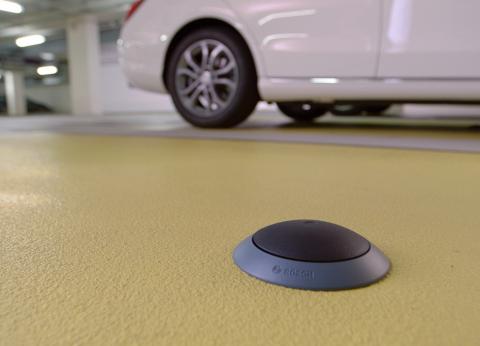
The key to active parking lot management is the reliable detection of available parking spaces. Bosch has developed an occupancy sensor that is scarcely bigger than a CD in terms of its circumference and measures around just three centimetres in height.
The sensors are installed in parking garages and on-street parking spaces, either on or in the asphalt, as desired. The special thing about this technology is that the occupancy sensors operate wirelessly and are powered by batteries, which eliminates the effort and expense of having to lay cables. Each battery has a service life of up to seven years. Thanks to their robust plastic housing, the sensors are capable of withstanding any type of weather conditions, in addition to the increased wear caused by heavy trucks and snow ploughs.
Inside the housing are two different sensor technologies that corroborate the information collected by the other. The benefit of this is enhanced, error-free reliability for detecting spaces.
Parking forecast
The occupancy sensor checks at regular intervals whether a parking space is available. Using a gateway, which is similar to an internet router, the sensor relays the encrypted information securely to a server, where a real-time parking map of all free and occupied spaces is created that can be accessed with the app or online.
“We're making parking spaces web-enabled,” Hoheisel said.
Meta-information on each parking space is available as well, including whether it is a space reserved for families, women or the disabled, what the parking time costs, and if a charge spot for electric vehicles is available. More services are also possible, such as a payment function. Using the app, drivers can pay for their parking time conveniently cash-free.
Active parking lot management is an example of how technology is shaping the connected world. However, the service is not only for drivers, but also parking lot operators.
“We can further improve the occupancy rate of heavily-used parking spaces,” Hoheisel said.
The key to this is through intelligently evaluating the data. A web portal provides parking lot operators with a clear overview of which parking spaces are occupied by how many vehicles and when. During peak times, this information can direct drivers to spaces that are less frequently occupied, for example.
Bosch engineers are developing a parking forecast as well. Using past data, they hope to draw important conclusions for the future, which could considerably alleviate the scramble for parking spaces often seen during recurring major events, for example.
Automated parking
The components of active parking lot management, which include occupancy sensors, the gateway and the real-time parking map, also set the stage for the fully automated parking function of tomorrow.
In the not-too-distant future, drivers will simply leave their vehicles at the entrance to a parking garage. Using their smartphone, they will give the car the command to look for a parking space on its own. The car will be summoned back using the same procedure. This is known as automated valet parking. To enable this service, self-driving cars need reliable information on free parking spaces, which Bosch can already supply.
“We're going to gradually introduce active parking lot management into Bosch's own parking spaces and parking garages,” Hoheisel said. As a result, associates and visitors will be able to find available parking spaces faster.
