Continental to start ABS and ESC production this year in India
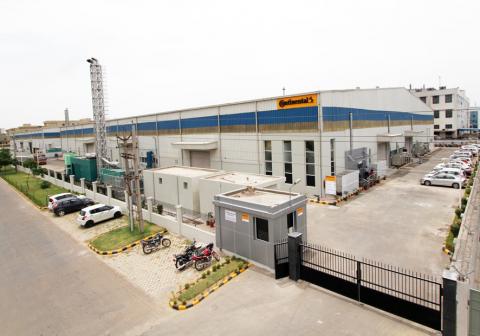
Continental will this year start production of anti-lock brake systems (ABSs) and electronic stability control (ESC) units in India. A new assembly line for ABS and ESC for passenger cars and later ABS for two-wheelers will be located in the existing Continental plant in Gurgaon, Haryana.
And local production of electronic control units (ECUs) is planned for 2018 in Bangalore.
The company is targeting the delivery of its first localised ABS and ESC products for India to a leading vehicle manufacturer by the end of 2016.
“The Indian market is one of the world’s largest markets for compact cars and two-wheelers,” said Felix Bietenbeck, head of Continental’s vehicle dynamics business unit. “By producing these systems in the market for the market, we are matching our portfolio to the requirements of our local customers, while keeping our technologies affordable."
The task of an ABS is to maintain braking stability and steering ability while braking on all types of road surfaces. An ABS allows for the maximum braking effect without the risk of the wheels locking up. It therefore improve the vehicle stability and steerability. To achieve this, the electronically controlled braking system captures the speed on all four wheels and calculates the optimum slip conditions by regulating the braking pressure on the individual wheel. Continental’s ABS product is modular and scalable, and can be customised for various control strategies for two- and four-wheelers.
“India tops the list of nations in total number of road fatalities,” said Claude d’Gama Rose, managing director of Continental Automotive Components India. “The widespread use of ABS, airbags and ESC in vehicles can contribute considerably to reducing the number of serious injuries and fatalities on Indian roads. With decades of experience in this area, Continental offers a portfolio of high performance and advanced products which can contribute to greater road safety.”
ESC supports the prevention of critical vehicle states. The system constantly evaluates the data from the wheel speed sensors, the steering angle sensor, yaw rate and lateral acceleration sensor and compares the driver’s input with the vehicle’s actual behaviour. If an unstable state is detected, for instance as the result of a sudden direction change, ESC responds in milliseconds and stabilises the vehicle through wheel-specific brake intervention and adjustment of the engine torque. At the same time, ESC is a prerequisite for further safety technologies such as adas. Based on ESC, surrounding sensors such as radar, camera and lidar technology are required for new predictive driver assistance systems, which can further enhance road safety.
In India, 32,524 lives were lost, and over 127,000 people were injured in two wheeler accidents in 2014.
Awareness and enforcement are critical in improving road safety. The recent draft notification from the Indian Ministry of Road Transport & Highways mandates that two wheelers with an engine capacity exceeding 125cc manufactured from April 2017 need to be fitted with anti-lock braking systems. All existing two wheelers exceeding 125cc need to be fitted with anti-lock braking systems from April 2018.
www.continental-corporation.com
