Should we stop trying to make motor racing safer?
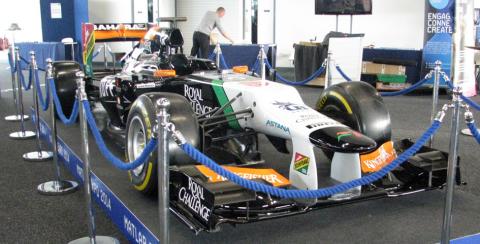
Steve Rogerson asks if making Formula One safer could end up destroying the sport
The recent announcement by Audi of its plans to send a driverless car at race speed round a motor racing circuit prompted me to ask a Formula One Facebook group whether this could be the first step on the way to a driverless grand prix? The response was predictable – no drivers, no interest. But why would that be the case?
There would be a lot of similarities between a driverless grand prix and the current situation. The engineering team would have to design and build a car that could go as fast as possible round a wide variety of circuits. It would have to be adaptable to the variations in those circuits. Factors such as tyre wear and fuel consumption would still have to be taken into considerations, as would all the other elements that can fail when you are pushing technology to its limits. And you could still have a pit crew for tyre changes and emergency repairs.
There would still be drivers, but not in the sense we know now. These drivers would be clever programmers writing algorithms to let the car adapt in real time to changing conditions and the behaviour of the programmes in other cars. Some would even write routines designed to trick the programme in a rival vehicle to allow it to overtake. And they would learn. The programmer of that other vehicle would be quickly writing a patch to take account of that new manoeuvre, much the same as a human driver would learn not to fall for that again.
So what is the difference? The answer, I believe, has to be the danger. Motor racing is a dangerous sport, as we were starkly reminded by the events at the Japanese Grand Prix, events that have now led the FIA to look at more ways to make the sport safer. But what if they succeed and make it totally safe? Is that really any different from the driverless grand prix described above? And would it have the same effect of destroying interest in the sport? Quite possibly.
The awful conclusion from this is that motorsport has to retain some of its dangers to maintain the interest of the majority of spectators. Take that away and the sport may go into decline. In other words, we may have to accept the odd serious injury or death if we are to keep motorsport alive.

Comments
make motor racing safer ?
No that should not happen. Already the sound or to be more precise lack of sound (the exciting roar) of powerful Formula 1 engines and then diesel motors at the Le Mans 24 hours makes for a homogenous product. I've already lost interest in F1 so making it safer will not help make it more appealing. You cannot legislate all risk out of any dangerous past time or sport. I wish all the best to Jules Bianchi and Michael Schumacher who was not even racing when he suffered such a terrible injury.
Make it safe but keep humans!
The human factor is why. An amazing overtake doesn't have to be physically dangerous to entertain me, or to be admirable. Half the team politics wouldn't be so interesting without the personalities and egos of the drivers. The intensity of competition would be less. The mid-race hissy fits just wouldn't be the same if the 'driver' was not in the car, racing wheel to wheel. The strategy side of things would be much less interesting if it did not depend in part on a human driving the car to its limits without sticking it in the tyre wall, or making an error. I say get rid of as much of the danger as possible. The situation with pointy farm vehicles on track is pretty easy to resolve. Add cockpit covers by all means - IF that is truly safer, which it may not be. Even under your 'driverless' model, there would still be pit crew, and sometimes marshalls, near these fast cars. Or should we replace them with robots? Worst thing about driverless cars would be the loss of in-race comedy radio messages from drivers spitting dummies out! That is All.