Bosch enters motorcycle powertrain market
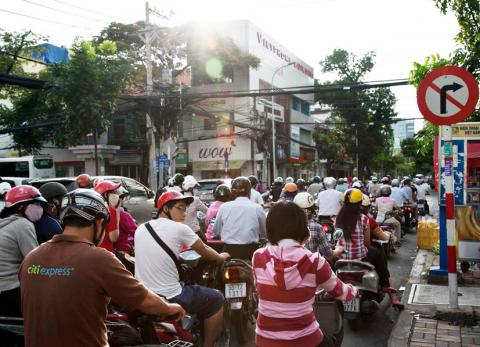
Bosch is entering the global market for two-wheeler powertrains with a range of complete systems. The company has developed an electronically controlled fuel injection system that can be adapted to any vehicle – allowing Bosch to offer products ranging from the cheapest single-cylinder two-wheeler in Asia to the high-performance bikes prevalent in Europe and North America.
“Bosch is known for the quality and efficiency of its automotive powertrain technology, and now we want to bring that same success to the two-wheeler,” said Rolf Bulander, a member of the Robert Bosch board of management.
Until now, the company’s presence in the two-wheeler segment has revolved chiefly around automotive components modified for use in high-performance motorcycles.
The company intends to apply its unified systems approach to low-cost models in Asia. Especially in India and southeast Asia, the two-wheeler market is experiencing double-digit annual growth. What is more, the popularity of carburettor technology seems to be waning in Asia as elsewhere.
“No new car has a carburettor anymore,” said Bulander, “and soon that will be true of the two-wheeler as well.”
In developing markets, Bosch is pinning its hopes on its electronically controlled injection systems, which are considerably more efficient. In technical terms, they are comparable with the port fuel injection systems for cars.
The company says it can offer its electronically controlled products for single-cylinder engines at about the same price as a standard carburettor version. A compact engine control unit and injection valve with additional functions help keep the cost low. The firm can also develop functions and software in such a way as to eliminate the need for sensors.
The electronic fuel injection system also opens up opportunities for two-wheeler connectivity functions. For instance, riders can call up information about average fuel consumption or journey details on their smartphone. Smartphones can also be used to activate immobilisers by sending a signal to shut off the fuel supply.
“In Asia, it is this smartphone connectivity that – perhaps even more than emissions regulations – provides the impetus for our electronic fuel injection systems,” said Bulander.
The company regards the two-wheeler segment as one of the growth markets of the future and expects worldwide sales of motorcycles to reach around 150 million units in 2020, more than the equivalent figure for cars. Just as it is for cars, Asia is a driver of growth in the two-wheeler segment.

Comments
My worry about 2-wheels motor market
To be honest, 2-wheels transports are just common in Asia and some countries in Africa. It's never been loved in Europe or America that's the main reason prevent enhancement and innovation was restricted on these kinds of vehicles. For instance, the electronically control fuel injection system (being mentioned in this post) have been long used in car/4-wheels vehicles, but now it's like a "BOOM" in motor revolution - it's really ridiculous here.
Opinion from http://fuelinjectorcleanerreviews.com
The 2 Wheeled Market is BOOMING!!!
Agreeing with the comment above, europe and my home (US) has never caught on with 2 wheeled transport. But Asians are really going to benefit with the much lower maintenance :)
I give props to Bosch for entering such a competative market, they are a pretty darn good company in just the tools sector.
Source: http://www.injectorcleanerboss.com/