Bluetooth Smart chipset allows addition of infotainment features
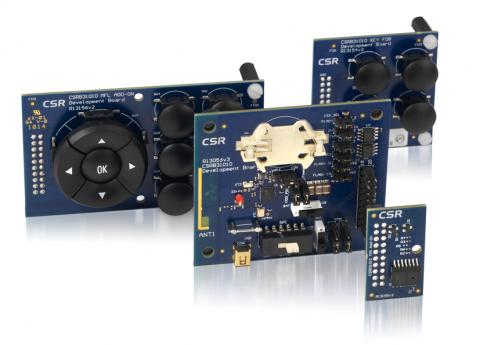
CSR has announced channel availability of the CSR1010 Auto, claimed to be the world’s first AEC-Q100 grade-two Bluetooth Smart chipset for automotive applications qualified for mass production. It equips car makers with the tools to add features to existing infotainment systems and to design future Bluetooth Smart applications for inside and outside the car.
With manufacturing benefits such as cable reduction and low power consumption, it enables capabilities to be added to existing closed automotive applications. Bluetooth Smart functionality will let drivers use their smartphone or tablet to display and analyse vehicle diagnostics securely, including infotainment systems and engine and fuel data. Vital vehicle information will now be available to users at all times.
The chip has been tested and proven to operate in temperatures from -40 to +105˚C, ensuring operation in harsh automotive locations such as tyres or smart antennas.
The device supports the CSR Mesh protocol, allowing for an almost unlimited number of Bluetooth Smart enabled devices to be networked together and controlled directly from the head unit display, a smartphone or tablet in the vehicle. The protocol uses Bluetooth Smart to send messages to other Bluetooth Smart devices in the network, which in turn relay them onwards. They do not require configuration.
Once a device is registered into the network, it can be removed and put back without causing disruption to the operation of the network. This should enable reliable networking of vehicle accessories such as roof racks, trailers and other applications of the mesh network outside of the car.
“We are seeing an entirely new connected car ecosystem developing in and around the vehicle enabled by Bluetooth Smart connectivity,” said Anthony Murray, senior vice president at CSR. “We have many key customers already using the CSR1010 Auto in their first Bluetooth Smart programmes for applications such as keyless entry. We also expect that the vehicle will become part of Bluetooth Smart based mesh network which covers the home, workplace and even the motorways of the future. Achieving AEC-Q100 qualification is a significant milestone which will bring our automotive customers closer to building an exciting next generation of automotive applications that connect the vehicle to the growing internet of things.”
A development kit, available by the end of the year, will include two development boards, three add-on boards and three example applications to accelerate the development of low power connected automotive products. The example applications will include a keyless entry system, multifunction steering wheel and a temperature pressure sensor to help developers not yet familiar with Bluetooth technology get started quickly.
