Circuit Protection: Transient nature
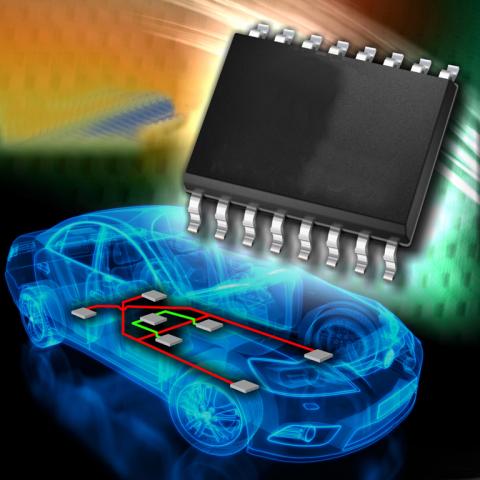
As the electronics in vehicles increases, there is more need for transient protection for vulnerable circuitry, explains Deres Eshete from On Semiconductor
More and more electronic circuitry is being incorporated into each new wave of automobile models. This means drivers and passengers can benefit from a greater breadth of features and functionality. In these increasingly crowded and complex electrical environments, where analogue and digital circuitry are now being placed in close proximity, the management of voltage transients is more critical than ever.
If reliable operation of vehicle systems for powertrain, comfort, safety and infotainment purposes is to be achieved, then innovative technologies and strategies need to be employed to ensure the highest degree of protection from transients is maintained in what are becoming increasingly uncompromising application settings.
The semiconductor content in vehicles has risen by an almost exponential rate over the past two decades. The numerous, highly sensitive ICs – such as microcontrollers, asics and FPGAs – inside each automotive design need to be safeguarded from the harm that transients can cause. Currently, a typical vehicle will contain more than 50 transient voltage suppressor (TVS) devices and this figure can be far greater for high-end luxury models, often as much as doubled.
The principal objective of protection against transients is to assure a long and reliable working life for the vehicle’s electronics. This means there will be a less frequent need for servicing to be carried out. It can also help the manufacturer to mitigate the risk of a recall due to a system fault in one of its models – something that can have a huge impact on the brand, both financially and in terms of reputation.
There are various phenomena that an automotive system can potentially be exposed to. Among these are large voltage spikes, load switching transients or possibly even load dump discharge conditions, although changes to alternator designs, especially in Western vehicles, are now helping to make this less of a concern.
There are two main areas in which the role of TVS devices is crucial within modern automobile design. First for in-cabin electronics, such as infotainment and comfort systems, where small signals are involved. Secondly, to deal with larger transients from frequently switched sources such as motors, solenoids and so on.
The ISO7637-2 standard defines the transient pulses with specific relevance to the automotive sector. It covers all vehicles that are fitted with either 12V for passenger vehicles or 24V for lorries and commercial vehicles electrical systems and specifies the test methods and procedures that need to be undertaken to gain compliance. It is worth noting that some vehicle manufacturers do have their own slightly different variations on the standard and the type of pulses that are taken into consideration.
As well as automotive systems becoming more sophisticated, things have been seriously compounded by the ongoing migration to next generation semiconductor technologies – with ICs based on smaller process nodes being more susceptible to the effect of transients and therefore in need of more effective protection. In addition, car makers are looking to implement reductions in vehicle weight to save fuel. This means the automotive industry as a whole is demanding components with smaller package dimensions and lower profiles. Component vendors must therefore face the challenge of producing TVS devices that deliver strong protection capabilities but are also in less bulky form factors.
At this point TVS devices for automotive applications generally tend to be based on SMA and SMB package formats. There is, however, for the reasons already outlined, steadily growing impetus towards implementing size reductions. Typically power ratings of around 600W must still be maintained despite this downsizing if the protection being offered is to be fully effective. Furthermore, lower clamping voltages are required by automotive manufacturers to reduce the stress levels caused by the presence of transients. Vendors are now looking to move towards SMA-flat and SOD-123FL formats.
SOD-123FL provides the significant shrink in footprint size that car manufacturers desire, with less PCB space being taken up. The thermal performance is compromised somewhat as there is less area available for dissipating the transient energy and the die size capability is reduced considerably. With asic geometries moving to 28 or 22nm, there is a greater need to suppress the peak voltage to a lower level because the silicon is more vulnerable.
System redesign is required to reduce power levels and this will mean more engineering resources need to be allocated. The associated development costs rise and the time to market gets pushed back. This makes the reasons for migrating far less clear cut. By comparison, SMA-flat is a much more attractive option. This too has the key advantage over the SMA and SMB devices in that it reduces overall size while still allowing the equivalent power dissipation levels to SMB devices and higher than SMA devices. Since it has comparable die size capability to the TVS package formats currently employed, it therefore eliminates the need for any expensive redesign work to be embarked upon. Thermal performance is upheld, but with the benefits of a lower maximum package footprint.
Current
When looking at the overall power requirements of the design, increasingly it is not just the voltage range that needs to be considered, but also the current consumption’s influence on overall energy dissipation. One way to ascertain the peak power dissipation capability of the TVS device that you are looking to specify is through a pre-defined pulse.
A 10 x 1000µs non-repetitive pulse can be used for this purpose – this basically means a pulsed waveform with a rise time of 10µs and a 1000µs period to reach half value. This should normally be easy to find on the device’s datasheet. Devices with SMA-flat packages are now being introduced to the market that have power dissipation levels in relation to this pulse of several hundred watts.
Electric vehicles
Moving forward, the anticipated growth in both pure electric vehicles (EVs) and hybrid electric vehicles (HEVs) will set new challenges for protecting against the presence of voltage transients. This will not only be in the vehicles themselves but also in the supporting infrastructure as it starts to be rolled out on a large scale.
It is expected that further obstacles will arise if the automotive industry finally does progress to 48V supplies. The signs are there. Audi, for example, announced last month that it is upgrading part of its vehicle electrical system from 12 to 48V and has demonstrated that on two concept vehicles – the A6 TDI and TS 5 TDI.
Although this still seems to be a long way off from being implemented in all vehicles, the start-stop systems in HEVs and the brake recuperation systems in internal combustion engine vehicles could encourage this development to progress quicker than previously envisioned. As these higher voltages are employed, the overall wattage of protection may need to increase and the frequency of transients and the types of transients will alter.
Conclusion
The migration towards higher voltage TVS components in combination with flat lead low profile device formats will have many implications for how the presence of voltage transients are tackled in automotive applications. They must combine all the attributes necessary to ensure that delicate items of integrated circuitry can withstand the rigors of being deployed inside modern vehicles, while also presenting car manufacturers with space and weight saving compactness without being subjected to greater thermal issues.
Deres Eshete is in charge of automotive marketing at On Semiconductor’s protection division
