Platform stays secure while speeding up app development
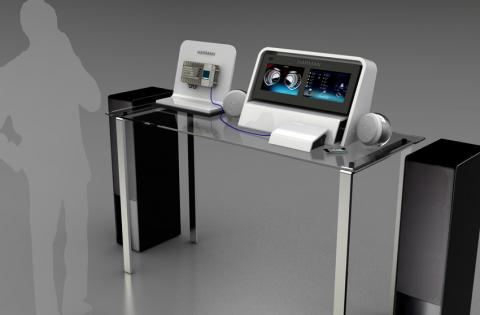
A scalable in-vehicle infotainment platform from Harman is based on an architecture that provides rapid development of connected car apps while protecting the integrity of the system against cyber security threats.
This platform has an HTML-5-based application environment for rapid development and deployment of connected apps and with network security technologies to ensure system security.
In addition, the system uses separate computing domains using a type one hypervisor for securing critical vehicle functions from errant or malicious software for automotive-grade robustness. And, lastly, the architecture also integrates advanced driver assist functions such as forward collision warning, lane departure warning and other safety features into the infotainment system to bring sensor-based safety features to a wide range of vehicles through a higher level of system integration.
The platform is ready for implementation into vehicles, and drivers can expect the system to be on the road within the next two years.
With automotive-grade Linux as the underlying operating system and HTML-5 as the application environment, developers will be able to create applications for the infotainment system using commonly understood technologies such as HTML, Javascript and CSS.
“With smartphones and tablets, people are now accustomed to customising their mobile computing experience through downloadable apps,” said Sachin Lawande, president of Harman’s infotainment division. “In-vehicle infotainment has traditionally not offered this capability – even though cars are increasingly connected. We’re excited to start this transformation with our next-generation scalable infotainment platform. This new platform offers users the customisability and upgradability they know from other devices.”
To provide users with application choices, Harman will offer an app store on its cloud services platform as well as working with OEMs.
As cars become more connected, car hacking is becoming a serious threat that is forcing the industry to consider how to protect vehicles against cyber attacks. The system resolves this by using a type one hypervisor on multi-core processors to implement two separate system domains that are isolated from each other. One domain manages critical car functions such as vehicle network communications, and the second domain handles infotainment applications such as navigation and internet access. The infotainment domain is securely firewalled from the vehicle domain, preventing any impact on safety-relevant features in the car. In addition, it includes security techniques such as secure boot and data encryption.
The multi-processor architecture, combined with the hypervisor-based separation of domains, also enables the platform to take a different approach to driver assistance and safety. Instead of using separate devices for infotainment and advanced driver assistance capabilities such as lane departure warning and collision warning systems, the system integrates both into the same platform. Adas software is seamlessly integrated with infotainment software to offer a suite of camera-based apps that use the computing resources of the platform to reduce cost and extend these safety apps to a wider range of vehicles.
• Harman has also introduced a flexible and upgradable infotainment system for car makers that can be installed even after the car has left the factory floor, without sacrificing the integrated user experience of a factory-installed system. These vehicle specific infotainment upgrade packages are built on the company’s Semi-OEM platform, which leverages a modular design, software updateability and feature sets that can be customised for the needs of global car makers. During this week’s Consumer Electronics Show in Las Vegas, the company will demonstrate the ease and speed of software upgrades to the system, which can be performed in less than 30s.
