RTI helps students in Indy autonomous car race
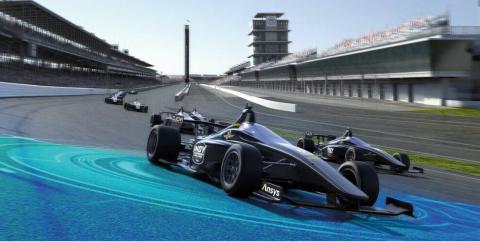
Real-Time Innovations (RTI) is helping more than 500 students globally design and develop the control software to race autonomously full-size, modified Dallara IL-15 race cars.
The software framework provider for smart machines and real-world systems has joined the Indy Autonomous Challenge (IAC), the two-year, $1.5m university competition to advance autonomous mobility technologies.
The students are competing in the first-ever head-to-head, high-speed autonomous race on the world’s largest racing stage, the Indianapolis Motor Speedway, in October 2021.
For this challenge, university teams from around the world will use the RTI open software framework, Connext DDS, to design, simulate and run on specially modified Dallara IL-15 race cars on the track. RTI’s software framework allows applications to exchange data in real time, while providing non-stop availability and security.
“One of the IAC’s primary goals is to solve edge-case scenarios – situations that only occur at extreme operating parameters, such as avoiding unanticipated obstacles at high speeds while maintaining vehicular control,” said Matt Peak, managing director of Energy Systems Network, a primary organiser of the IAC. “Such a task would be impossible without real-time data transfer. RTI’s partnership gives our teams a strong foundation for racing.”
Connext DDS is fully compatible with ROS2, Autosar and other systems, enabling more rapid prototyping and development. With car speeds expected to top 320km/hr, Connext DDS should provide safety that is certifiable to ISO 26262.
“This race is a formidable challenge, with a required lap speed that is faster than some winning professional racers over the last decade,” said Neil Puthuff, senior software integration engineer and project leader at RTI. “It will require ingenuity and making the most of every microsecond in the control system. The students need a proven, maximum performance framework for their cars that can handle the extremes and integrate whatever software they create or select for victory from initial prototypes and simulation, through field trials and on to race day. Great competition spawns great innovation, and we’re proud to be part of a challenge that will look to inspire the next generation of mobility leaders and move the industry forward.”
RTI joins an group of automotive and technology leaders including Ansys, Aptiv and Microsoft as official sponsors in the challenge.
The IAC is supported by the RTI University Programme, which enables university research and hands-on education. Universities around the world are using RTI technology to support their research in areas including robotics, autonomous vehicles, space exploration and connected healthcare.
The IAC, organised by Energy Systems Network and the Indianapolis Motor Speedway, is a $1.5m prize competition among universities to programme modified Dallara IL-15 race cars and compete in the world’s first autonomous head-to-head race around the famed Indianapolis Motor Speedway on 23 October 2021.
Racing at speeds up to 320km/hr, the primary goal is to advance technology that can speed the commercialisation of fully autonomous vehicles and deployments of adas.
www.indyautonomouschallenge.com
