IDT and 5G Lab collaborate on autonomous vehicle communications
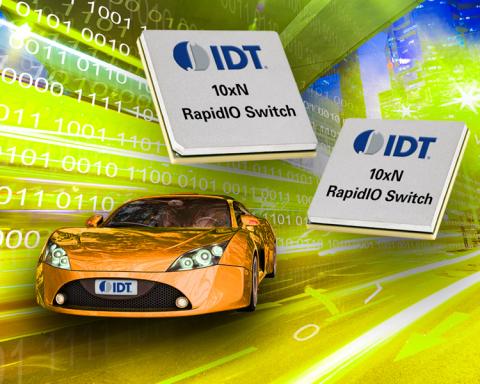
Integrated Device Technology (IDT) and 5G Lab Germany have started a multi-year collaboration on research related to 5G tactile networks, including the application of technology to enable network-connected autonomous vehicles.
The project extends the Dresden-based laboratory’s focus on combining 5G technologies with system-transforming applications. The project’s core technology is IDT’s low-latency Rapid IO interconnect, used for nearly every 4G telephone call made globally, as well as for real-time sensor analysis in a variety of aerospace and defence systems, applicable to autonomous vehicles.
The Rapid IO technology will be used to explore two key elements of the network. First, the 100ns latency Rapid IO switching and interconnect technology will be used to realise 5G Lab Germany’s vision of transforming the vehicle into a connected appliance by networking it with a 5G base station’s edge computing server.
Secondly, it is planned for Rapid IO technology to be evaluated to connect multiple vehicle sensors in real time for the mission-critical sensor fusion network essential for the self-driving or computer-assisted driving experience. A Rapid IO-connected heterogeneous computer network will run real-time analytics to assist various network devices, including vehicles.
“With Germany’s leadership in the global automotive industry, our lab’s focus on the tactile internet of things, and IDT’s low-latency interconnect and market-leading timing portfolio, the key elements are in place to tackle the real-time mission-critical challenges of platforms for the tactile internet, including autonomous vehicles,” said Gerhard Fettweis, 5G Lab chair. “With the 1ms round trip constraints in 5G deployments, we need low-latency computing platforms for vehicles, base station and edge computing servers. This project will explore connecting the requisite high-performance computing nodes through the deployment of IDT Rapid IO technology and associated timing products.”
The collaboration will build on IDT’s recently announced RXS family of 50Gbit/s Rapid IO products, as well as computing appliances under development by IDT partners in the Open Compute Project’s (OCP) high-performance computing group. The OCP’s projects support heterogeneous computing between x86, Arm, Power Architecture, GPU and FPGAs.
“Computing is moving where it needs to be – close to the end user experience – and it has to happen in real time, which means it will require low-latency interconnect with superior systems synchronisation,” said Sailesh Chittipeddi, IDT’s chief technology officer. “As the technical needs of connected autonomous vehicles and 5G edge computing servers become more clearly defined, it is becoming increasingly clear that Rapid IO technology – with more than 110 million ports shipped to the wireless base station and aviation markets – will keep IDT in the centre of development for distributed computing with multi-processor and sensor networks.”
Chittipeddi also said that, with the recent acquisition of German company ZMDI, IDT enhanced its technology portfolio with automotive and sensor platforms, which could play a crucial role for autonomous vehicles and related 5G products.
Initial details of and advances from the joint collaboration are expected to be presented at the International Supercomputing Conference from 19 to 23 June in Frankfurt and at the Mobile Edge Computing Congress from 21 to 22 September in Munich.
