Google partners FCA to boost self-driving car research
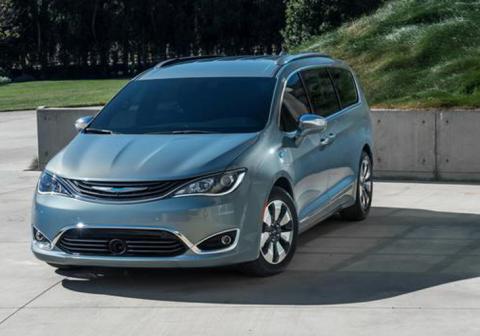
Google’s self-driving technology is to be integrated into the all-new 2017 Chrysler Pacifica Hybrid minivans to expand Google’s existing self-driving test programme. This is the first time that Google has worked directly with a car maker to integrate its self-driving system, including its sensors and software, into a passenger vehicle.
Google has been using modified Lexus and Toyota SUVs and hybrids along with 100 pod-cars developed by Google itself. Google already has existing relationships with tier-one suppliers such as Continental, Bosch, ZF, LG and Nvidia, but has been searching for an OEM with which to collaborate.
“There are reasons Google might see an advantage in working with FCA, including the automaker's efforts to find a partner and share capital,” said Colin Bird, senior analyst with HIS Automotive. “Up to now, based on IHS Automotive analysis, FCA has little to no research or development in terms of L3 to L5 autonomous car research and the car maker has made no remarks to the contrary. Thus far, more than eight OEMs have made autonomous car announcements – mostly with target dates of 2020 – and FCA has not been one of them.”
IHS forecasts that there will be approximately 10.5 million self-driving and driverless (L4 and L5) cars in use globally by 2030.
The Chrysler Pacifica Hybrid minivans will be used later this year for Google’s self-driving testing, more than doubling Google’s current fleet of self-driving test vehicles. Engineering responsibilities will be shared based on each company’s respective expertise.
FCA will initially design and engineer around 100 vehicles built for Google’s self-driving technology. Google will integrate the sensors and computers that the vehicles will rely on to navigate roads autonomously.
Both companies will co-locate part of their engineering teams to a facility in south-eastern Michigan to accelerate the design, testing and manufacturing of the self-driving Chrysler Pacifica.
“FCA has a nimble and experienced engineering team and the Chrysler Pacifica Hybrid minivan is well-suited for Google’s self-driving technology,” said John Krafcik, chief executive officer of Google self-driving car project. “The opportunity to work closely with FCA engineers will accelerate our efforts to develop a fully self-driving car that will make our roads safer and bring everyday destinations within reach for those who cannot drive.”
Self-driving cars have the potential to prevent some of the 33,000 deaths that occur each year on US roads, 94 per cent of which are caused by human error. This collaboration will help FCA and Google better understand what it will take to bring self-driving cars into the world.
“Working with Google provides an opportunity for FCA to partner with one of the world’s leading technology companies to accelerate the pace of innovation in the automotive industry,” said Sergio Marchionne, chief executive officer for FCA. “The experience both companies gain will be fundamental to delivering automotive technology that ultimately has far-reaching consumer benefits.”
Google’s self-driving cars are being tested in four US cities. The self-driving Chrysler Pacifica Hybrid minivans will be tested by Google’s self-driving car team on its private test track in California prior to operating on public roads.
“Teaming up with Google helps put FCA in a stronger position to compete when it comes to autonomous car research and development, though significant effort remains to introduce this technology into FCA production vehicles,” said Bird. “Conversely, Google’s more intimate relationship with a large scale OEM will provide significant integration and manufacturing experience and may portend an on-going, developing relationship which may lead to deploying Google’s driverless software in production FCA vehicles.”
Google is working to develop fully self-driving vehicles that have the potential to make roads safer and increase mobility for the millions of people who cannot drive. The ultimate goal is to help people get from A to B at the push of a button.
“Google’s software today is more capable than most human drivers under certain conditions, but still requires significant advances to handle weather and rare events,” said Bird. “The company has long been a pioneer in this space, helping to steer the direction of autonomous car research and development.”
In the project's seven year history, the vehicles in the test fleet have self-driven over 2.4 million kilometres on public roads, and they're being tested in Mountain View, California, Austin, Texas, Kirkland, Washington, and Phoenix, Arizona.
