Connected cars: Bridge to the future
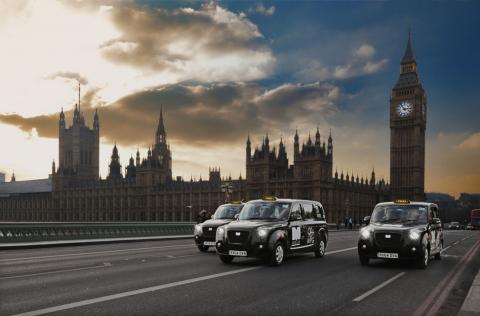
Tom Blackie, head of automotive at Real VNC, discusses how technology will influence the future vehicle, its role and its management
Vehicles have undergone significant changes since their inception, but the last few years have arguably seen the most dynamic changes with many more expected to come.
Plans to ban completely new petrol and diesel cars in some countries, the emergence of the electric car and the growing hype around the introduction of autonomous vehicles are just some of the latest notable updates. However, the potential of vehicles has opened up possibilities of which many are not even aware.
Smart cities
With more of the world’s population living in urban areas than ever before, smart cities are expected to alleviate some of the congestion this will cause by enabling efficient processes of which vehicles – and vehicle management – will be a key part.
For example, there will eventually be everything from cars exchanging data with smart traffic lights that change in response to the amount of traffic and the type of vehicle ahead through prioritising bikes ahead of HGVs for safety, or ambulances ahead of all other vehicles for emergencies. In addition, there will start to be the next stage of fleet management, with control centres using live data feeds from vehicles and the surrounding environment to re-route vehicles around predicted problems before they happen and enabling fleets to adapt their movements continuously to compensate for breakdowns or delays. This is creating smart vehicles, which can communicate with external organisations and smart city infrastructure to prevent gridlock or dramatically improve delivery times.
With this system, it could become commonplace for nearby lorries to pick up unexpected loads in the event of a breakdown, predict and avoid traffic, weather, crime, roadblocks or maintenance issues, making fleet management and the wider transport networks less congested and more efficient.
Connected taxi
With the emergence of ride-sharing and similar businesses, traditional taxi firms are beginning to struggle to compete. For example, San Francisco’s biggest taxi firm Yellow Cab last year had to file for bankruptcy protection. However this trend is driving traditional taxi and concierge services to transform their offerings to beat the competition, benefiting both the industry and end user.
These more traditional taxi firms will start to offer connected cabs that let passengers do anything from streaming smartphone applications to in-cab screens or receiving personalised, location-based adverts on the move.
One taxi firm – Metrocab – is already building taxis that enable passengers to stream emails and music from tablets and phones to in-cab screens and speakers and let drivers receive real-time weather or traffic alerts to their dashboard via their phones to reduce journey times, creating a completely new journey experience.
Monetise
With the connected vehicle market expected to reach £120bn by 2022, it’s no surprise that the parties involved are looking for new ways to profit from this trend.
New technology upgrades that cars will receive will provide an opportunity for companies to monetise drivers and passengers in ways that were not possible before. These vehicles are generating a treasure-trove of journey and user experience data that can be used to make journeys safer or more entertaining, or even shared with insurance companies. The possibilities mean that eventually vehicles could receive personalised, location-based adverts, dealerships could remotely connect to car dashboards to fix vehicle faults in real time or issue remote upgrades on the move.
This could also mean that the role of the vehicle could change in the way that the role of the mobile phone has, from providing one function – for a phone, it was making calls, and for a car, it was to help a person get from one destination to another – to a tool that plays an active part in day-to-day choices. For example, passengers and drivers could be advised of the best nearby beaches on a sunny day, or in the evening they could be directed to nearby restaurants.
Remote operation
Hauliers are also being increasingly required to carry goods across longer distances, with greater speed and efficiency and at a lower cost to the environment. Many of them have been using real-time telematics to monitor data to help with decisions about the health of vehicles, or the best routes. However, there will soon be more real-time remote intervention in vehicles. With remote access capabilities, more remote correction and re-calibration of environmental or safety defects could occur, and there could be remote, real-time regulation of software failures and fuel use, as well as the health, speed and location.
Emerging remote access technology is set to give fleet managers the power to log into vehicles and calibrate instruments and fix defects in real time.
Future auto technicians could remotely view instrument clusters to see if a vital tyre pressure reading is inaccurate and connect into the vehicle to re-calibrate the sensor and correct the reading. They could even intervene to fix cargo safety faults. For example, an impending breakdown in a chilled cargo refrigeration unit could be corrected by remotely triggering an emergency cooling system to keep food safe.
Similarly, technicians will be able to see in real time if vehicle emissions are exceeding emissions targets, and a control centre could then remotely inject larger amounts of Ad Blue into the exhaust to counterbalance this. There has already been an increased demand to implement web-based platforms for technicians to be able to monitor, calibrate and fix vehicles remotely at all times from any location.
While driverless vehicles are being tested, the reality is that they will not be on our roads and used by all in the next couple of years. The use of teleoperation on the other hand is likely to be the most likely next step in the progression to vehicles being driven without humans. This could mean that buses and cars could soon be remotely guided through cities from control centres, and if they encounter any problems, they could have a function that automatically informs an operator who could remotely view the car cameras to assess and resolve an issue.
Cyber security
The same applies to the management of cyber security. With cyber threats for vehicles growing, there will soon be IT teams and cyber experts remotely logging in to car dashboards to monitor or patch cyber vulnerabilities as second nature, as and when they arise, thereby limiting the chance of more serious consequences.
Conclusion
Ultimately, while there will be many changes to the design of vehicles, the management and upkeep of vehicles, and the role they will play, the biggest evolution we’ll see is how vehicles put more power back into the hands of the consumers that use them, and the technicians that maintain them. The future vehicle will be part of a vast adaptive smart city ecosystem exchanging a continuous mass of real-time data to make journeys safer, smoother, and more efficient and entertaining than ever before.
Tom Blackie is head of automotive at Real VNC
