Kurt Sievers from NXP discusses where now after Freescale takeover
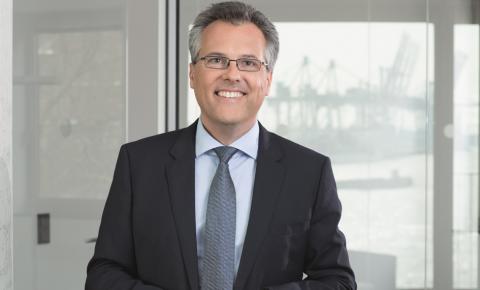
Now that NXP’s takeover of Freescale is complete, Steve Rogerson talks with executive vice president Kurt Sievers about what this will mean for the combined company’s automotive business going forward
Back in March 2015, NXP Semiconductors shook up the electronics industry with the announcement that it was buying rival Freescale Semiconductor to create a combined $40bn company with revenues topping $10bn. Since then, the two companies have spent the best part of a year sorting out the details and obtaining the necessary approvals reaching the point last month where they announced the merger was completed.
And what a merger. With Freescale on board, NXP leapfrogs from fourth in the table of automotive semiconductor suppliers to first, knocking Renesas down to second place; Renesas was in that position partly thanks to its own takeover of NEC back in 2009. Before the merger, Freescale was fifth in the table. The move also sees Infineon drop from second to third and ST Microelectronics from third to fourth.
Kurt Sievers. NXP’s executive vice president for automotive, sounded a note of caution about these places as he acknowledged they were based on last year’s results.
“I don’t know how these guys have been growing since,” he said, “but I am confident we have outgrown them.”
Background
NXP and Freescale both have similar backgrounds with their names coming into existence about ten years ago but their histories date back a lot further. The name NXP was a rebranding in 2006 of Philips Semiconductors, which dates back to 1953. Likewise, the name Freescale came into existence in 2004 as the new name for Motorola’s semiconductor division, which can trace its roots back to 1948. Given that both were major players in automotive, it is odd how little duplication there was in their automotive ranges, a fact that made the merger an attractive prospect.
“We had an extremely complementary product portfolio between NXP and Freescale,” Sievers said. “This was very fortunate; it was not by design. There is no overlap.”
For example, on the mems side in automotive Freescale was the leader and NXP didn’t play at all. And NXP brings its analogue, RF and security products into the equation. However, they both served the same customers in terms of tier ones and OEMs.
“From the customer perspective, we have a very high overlap,” said Sievers. “We have been serving the same customers but with different products. This means we now have a higher share with each customer.”
Moving on
Going forward, he said, this meant the company could enter new applications building on their combined leadership positions.
“We aim to continue to be the number one in infotainment and security, and in in-vehicle networks,” he said. “This was all NXP. We were by far the number one in these anyway. Freescale brings a strong position in safety, such as ABS. This is a good starting point for moving forward with adas applications. Freescale also has a strong position in body electronics.”
So, he said, this meant the existing businesses were number one in body electronics, safety, infotainment, networking and security. This combination means the company can stake a strong claim to being the new number one in the secure connected car.
“This is security plus adas,” he said. “This is where we are putting a lot of focus. We think we have the best possible starting point for adas because we now have everything that it takes. We have this in the sensor and radar side, in sensor fusion, and in the processor side.”
Freescale has a digital networking business and high-end multi-core processors, mainly for use in data centres. But NXP is now eyeing these for high-end data processing in vehicles and in the infrastructure for V2X communications and cloud computing.
“These will send information, such as the traffic situation, back to the car,” said Sievers.
Security
He also believes that the combined company is now in a position to tackle seriously the security concerns that connected car applications bring with them.
“The trouble with the connectivity is it makes the car more vulnerable to being hacked,” he said. “I love the technology, but I will only allow my family into the car if I can trust it will not be hacked. This is where the combination of Freescale and NXP is so good.”
NXP has established itself in the security side of the payment industry as well as in passports and driving licences.
“The technology is very sophisticated,” said Sievers, “and we are very busy in applying the same excellence in data handling into the car industry. That will be a dual lock that will control all the interfaces the car will have. This is fundamental for adas.”
Last year the company won V2X business with General Motors and a part of that agreement was the mobile security, meaning this has now been qualified for automotive use. But it is not enough to control only the wireless interface to the outside; the communications within the vehicle itself need to be monitored.
“Say someone breaks away your mirror and uses the cable to get into the Can bus,” said Sievers. “You have to protect internal ECUs, and that is where Freescale comes in. NXP has not played there before.”
He was unwilling to give details about how this is going to pan out but said the company was working at securing the communications “so the wrong stuff doesn’t arrive at the application. We can’t say yet how we are doing this.”
Radar chip
One product the company can talk about is the first release for automotive since the merger. This is claimed to be the world's smallest single-chip 77GHz radar transceiver (7.5 by 7.5mm) with very high resolution.
Radar is a core technology in existing and future adas as it provides precise data about the surrounding driving environment, ultimately making life safer for drivers and consumers on the road. Working prototypes of the RF cmos IC are in the hands of NXP’s lead customers; they are also being field tested by Google engineers working on the self-driving cars project.
The chip should enable a new generation of radar sensor assemblies, roughly the size of a postage stamp, that can be integrated invisibly practically anywhere in the car – an advantage for vehicle designers as the number of sensors steadily increases on the road towards automated driving. Its power consumption is said to be 40 per cent lower than conventional radar ICs. Key safety applications include emergency braking, adaptive cruise control, blind-spot monitoring, cross-traffic alert and automated parking.
Geography
From a customer facing perspective, the two companies are in all the right places geographically. However, this will inevitably lead to some consolidation, or in other words job losses.
“We will go for the best possible team,” said Sievers. “There will be no staff reductions in R&D because we are so complementary, but there will be some reductions in customer-facing teams. We will have two managers for each team, for example, and that has to go down to one. We have a pool of good people from which we can find the best team going forward.”
The company has centres in North America, Europe and the Far East and is in the process of converging the offices.
The key location though, said Sievers, will be Silicon Valley.
“The industry will change more in the next five to ten years than it has in the last fifty,” he said. “Most of that change will happen in Silicon Valley. The way cars are being designed will turn more to the way IT companies have been working. That is where we want to be, on the forefront. We can now play a future role driving the changes.”
Freescale name
The name Freescale has gone. NXP decided to scrap the name from day one, which means on all the buildings only NXP will be seen, what Sievers describes as “a clean cut”.
However, some of the Freescale product names will remain, a good example being the Kinetis family of MCUs. No product families will be cut and no factories will close, Sievers promised. The only area where there was series overlap was in a non-automotive RF range, and that business was sold before the merger was completed.
One item that Sievers said the company definitely wanted to keep was the Freescale Technology Forum, an annual four-day event in Texas that attracts a couple of thousand engineer. This will continue but will probably be rebranded the NXP Technology Forum.
Less certain is what will happen with Freescale Cup, the event in which engineering students are challenged to design self-driving model cars. Teams from all over the world compete in this tournament.
“I don’t know how this will go forward,” said Sievers, “but we like the idea and we will continue in some form. We love the idea of engaging engineers at universities.”
Conclusion
Freescale and NXP have both been big players in the automotive market for years. Now that NXP has taken over Freescale, the combined strength could be bigger than the sum of the parts, or less. Only time will tell, but for now the company can claim to be the new number one semiconductor supplier to the automotive industry. Though it will be sad to see the Freescale name disappear from the industry, it does mean the new NXP is far more a one-stop shop and in a strong position to combine the strengths of the two entities as it tackles adas and autonomous vehicle applications.