adas

Jaguar checks for drowsy drivers

Driver condition monitoring is standard on Jaguar’s E-Pace

Jaguar has developed driver condition monitoring technology that alerts the driver if it detects the tell-tale signs of drowsiness.

One in eight UK drivers admit to having fallen asleep at the wheel, and this causes up to a quarter of fatal accidents.

Rohm improves mounting reliability for mosfets in adas cameras

Rohm RV4xxx mosfets for adas camera use

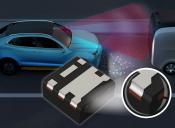
Rohm has developed 1.6 by 1.6mm mosfets with improved mounting reliability. The RV4xxx series is AEC-Q101 qualified, ensuring automotive-grade reliability and performance under extreme conditions.

The firm’s original package processing technology enables the miniaturisation of automotive components, such as adas camera modules, that demand high quality.

Toyota Safety Sense installations top ten million

Toyota Safety Sense can help detect cyclists

More than ten million vehicles worldwide are using Toyota’s Safety Sense active safety technologies just three and a half years after their introduction in 2015.

The active safety technologies are designed to help prevent or mitigate collisions across a wide range of traffic situations.

Safety Sense is in approximately 90 per cent of Toyota passenger vehicles in the Japanese, North American and European markets. At present, it has been introduced in 68 countries and regions, including China, other selected Asian countries, the Middle East and Australia.

Wind River provides VxWorks for TTTech autonomous driving software

Wind River helps TTTech Auto develop connected car software

Wind River’s VxWorks real-time operating system is powering the latest versions of MotionWise, TTTech Auto’s safety-software platform for autonomous driving applications.

Building on their long-standing partnership, Wind River and TTTech Auto, a provider of safe software and hardware platforms for automated driving, have worked together to develop scalable ECUs based on networked multi-core systems-on-chip (SoCs) for safety-critical automotive applications.

Sensors: Uber lessons

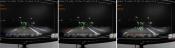
Images from a video feed watching a TV monitor showing the clip released by the police. The overlaid graphics show an adas system response. The green and white bounding boxes are outputs from the bicycle and pedestrian detection modules. The horizontal graph shows the boundary between the roadway and physical obstacles, known as free-space.

Amnon Shashua, chief technology officer of Mobileye, looks at sensors and other adas technology in the wake of the tragic Uber autonomous driving accident

Continental uses cameras and sensors to warn of aquaplaning

Cameras recognise a specific splash and spray pattern of the tyres that can be aquaplaning in its early phase

Continental is developing ways to warn drivers about an imminent risk of aquaplaning. The aquaplaning assistance concepts use surround view camera images and signals from tyre-mounted sensors.

The holistic concept can give the driver time to prevent the front wheels of the vehicle from floating, while warning other vehicles to be prepared for a critical situation.

Driver Assistance: Protecting adas

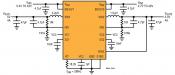
Schematic delivering 5V at 4A and 3.3V at 4A outputs, at 2MHz

Tony Armstrong from Analog Devices discusses why automotive adas need low EMI and EMC emission switching converters

Renesas helps Nissan Leaf with automated parking

The Nissan Leaf uses Renesas technology for automated parking

The new Nissan Leaf, which debuted this week, uses the Renesas R-Car system-on-chip for car infotainment and adas as well as its RH850 automotive control MCU for the ProPilot Park, a full-fledged automated-parking system.

The parking facility recognises spaces adequate for parking, verifies that there are no obstacles in the way, and handles the role of issuing control commands for acceleration, braking, steering and gear changing.

AutoSens in Brussels reveals full agenda

AutoSens returns to Brussels

The full agenda for September’s AutoSens conference in Brussels has been revealed. Vehicle Electronics is a media partner of the event, which will be held from 19 to 21 September 2017 at AutoWorld.

The third in its series of events, AutoSens is expected to attract more than 400 technical experts and engineers, from disciplines such as cameras, lidar, radar, image processing, computer vision, in-car networking, testing and validation, certification, and standards.


Pages