Design & Modelling: All change
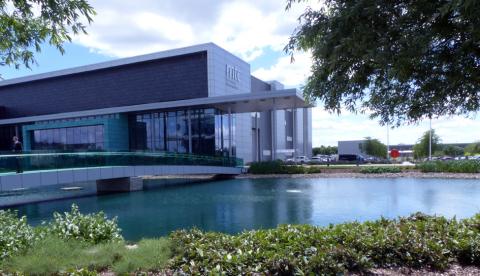
Siemens is bringing together the elements of vehicle design, as Steve Rogerson found out at the company’s PLM Automotive Symposium at the Manufacturing Technology Centre near Coventry, UK, in June
Everything is changing. That was the key message from Ian Strath, portfolio development director of Siemens, as he opened June’s PLM Automotive Symposium and looked at modern vehicle design.
“We are living in a world of change,” he told delegates at the Manufacturing Technology Centre near Coventry. “We have cars that are going electric. We have cars that are full of software. There are new materials. There is mass customisation. The number of options is increasing exponentially. The choice we have is amazing.”
And then there is the IoT letting cars be connected back to the base so manufacturers can understand what their cars are doing in service.
“Car companies, suppliers and so on all need to manage this in terms of delivering a quality product at the right price and on time,” he said. “We are helping because the power of computing is increasing what we can do in terms of modelling. The scope of what we are doing in increasing all the time. Software, digital threads and digital twins make a difference.”
Digital threads link all the processes together with each stage of design iterative and feeding into the next stage. A virtual replica, or digital twin, of the whole process can be created. There is also a digital twin of the product to predict how the vehicle performs even before the prototype stage. And there is a digital twin of the production process.
“Finally,” he said, “we have a digital twin of performance. There is a lot of value in showing how a product works when it meets reality.”
One company that is benefitting from this is Swedish car designer Uniti. Its goal is to make an electric vehicle that is the best in the world, or at least design one; the company has no plans to manufacture itself, according to CEO Lewis Horne.
“We don’t touch any hardware because there are people out there who are a lot better than us at that,” he said. “We don’t know how to make a car but we do know how to make virtual reality.”
The company used Siemens PLM technology to provide the digitalisation while keeping control of its own data. This let the car designer create a digital twin.
“PLM gets us from end to end, from design to production,” he said.
The company has some prototype cars and is looking to take them into production late next year but hopes to have ten beta test cars before that.
“These will be gathering data, including customer behaviour data, showing how they drive and so on,” he said.
Thermal management
One of the challenges in moving to electric powertrains is a lack of experience notably in energy and thermal management.
“People have been working with traditional power sources for many years,” said Leigh Gillard, model-based systems engineer at Siemens. “We are now facing quite a different challenge in the automotive industry.”
He said there were three main trends – emission reduction, new mobility and market globalisation.
“To meet the emissions targets, something has to change, so a lot are looking at electrification,” he said.
On new mobility, the trend, he said, was towards mobility-as-a-service and more connectivity. And market globalisation was increasing choice for car buyers.
“We have all these trends but don’t know when they will impact and at what level,” he said. “Bringing that down to the engineers, they have to deliver limited weight, emission friendly, fuel-efficient vehicles yet still maintain expected vehicle performance. They also have to manage the complexity while bringing in more advanced autonomous driving from level three to five.”
Designing an electric vehicle starts with requirements, such as range, fuel economy, emissions, driving performance and passenger comfort. These have to be there throughout all the different parts of the process.
“We have a facility in France to measure different attributes of a vehicle to use in models for testing,” said Gillard. “We can integrate energy consumption at each step of the vehicle development process. What we are really talking about here is a digital twin. This takes us from requirements to launch, through concept and architecture, virtual and physical design, verification and validation.”
Thermal and energy management were deeply related, he said, and a vehicle level approach needed to be adopted to see how systems interacted.
“System-level, fast running models can support the process from start to finish,” he said. These can be enhanced with data from 3D CAE and CAD plus physical tests where appropriate.”
Complexity
When it comes to autonomous vehicles, the number of elements that need to be considered grows massively. These cars will need sensors, processing power to make decisions and the ability to act upon those decisions, explained Steven Dom, automotive solutions manager for Siemens.
“On top of all that, the sensors are influenced by the environment and the traffic,” he said. “And vehicle performance and dynamics also come into play. Above all that is the infrastructure with V2V, 5G, V2X and so on.”
There have been estimates that to develop an autonomous vehicle properly that the road testing would last 14.2bn kilometres, which cannot be done. Yet they will need increased levels of hardware and software complexity.
“The wiring loom would be like comparing two strands of spaghetti with a bowl of spaghetti,” he said.
And even after it is all finished, there would need to be regular over-the-ait software updates.
As an example of the complexity, Dom looked at trajectory planning. The car will look all around itself and work out where it wants to be and it has to know how the car will behave as it tries to get there. The trajectory will be planned using a digital model of the car and through this will predict the next, say, twenty steps, but it only executes the first of these.
“It has to constantly analyse and change as each step happens,” he said. “It may after one step encounter a patch of oil and have to make adjustments because of that. And it has to do this in different weather conditions and the sensors have to allow for the vibrations of the car.”
Testing all this means coming up with an accurate digital model of the car that works in real time.
“You have to predict realistic human responses for a whole range of conditions and with no physical crash test dummies,” he said. “Crash test dummies do a good job in matching a human body in a crash situation but not in non-crash situations. We developed a model of the human body that has bones and muscle structure. You need to think of this when you are planning steering movements.”
Simulations, he said, were going to be needed that covered the wide variety of driving conditions virtually. Cars would need to be tested in the most extreme scenarios.
“When you move to level five autonomous driving, there will be millions of scenarios that need testing,” he said. “You can only do hundreds or perhaps thousands by actual driving. You are going to need a lot of simulation. You need a digital twin of the world and a digital twin of the vehicle to reduce the number of scenarios that have to be run in the real world. Cars on the road are already gathering data that can go into these simulations.”
And he said at the end of the day there was no such thing as one hundred per cent safety. It was a matter of working out what was acceptable.
Functional safety
For automotive, the functional safety aspect is governed by ISO 26262, and here Siemens believes integrating application lifecycle management (ALM) with PLM can help using technology from Polarion, a German company it acquired in 2016.
“Polarion allows you to address functional safety,” said George Harkay, Polarion portfolio development executive. “And a digital twin lets you test what is going on without the expense of manufacturing. Managing complexity is a challenge. As the products become smarter, the number of recalls is increasing. Software in cars was once in separate silos but now everything is integrated with other systems. And this complexity will increase even more when the driver is no longer in control of the vehicle.”
He said that Polarion’s ALM platform was the first to get ISO 26262 certification and could handle up to Asil D from initial planning to deployment.
Batteries
Marco Buonfiglioli, principal engineer at Siemens, looked at how software tools could help improve battery performance in electric vehicles
“The cost and weight of the battery are a significant proportion of a vehicle,” he said. To help optimise these, he proposed using three different tools – BDS battery design studio, Star-CCM+ BSM battery simulation model and Amesim.
“BDS is for virtual cell design and test,” he said. “It gives detailed geothermal representation coupled with a performance model to build the cell digital twin. The BSM is for battery pack design. And Amesim is a tool for system modelling. You can model the whole drivetrain for an electric vehicle.”
He said it was important to optimise the battery pack for weight as the cell weight was fixed.
“This is the only way you can reduce the overall weight,” he said. “And you can gain insight into cell performance with virtual prototyping.’
Noise
One problem with electric vehicles is the horrible whining noise they make compared with the power that can be heard from an internal combustion engine.
“The high-frequency noise can be annoying,” said Strath. “Also, with electric vehicles the low volume means that other noise such as road noise can be heard more.”
One company, Punch Powertrain from Belgium, is using the Siemens Simcenter 3D engineering software to optimise vehicle design to improve noise levels.
“Noise simulation can show, for example, how the wind flow round the wing mirrors can generate noise,” said Strath. “Simulation is a lot cheaper than doing this in a wind tunnel. It lets you see how adding weight or other tweaks can reduce the noise levels in the car.”
Conclusion
Strath summed up the proceedings by saying how important it was to keep time, quality and cost under control in a time when everything was changing so quickly.
“The car makers have done an amazing job of incremental change,” he said. “But that is now not good enough. The change has to speed up to remain competitive in this new world.”
