Connected Cars: Don’t reinvent the wheel
Lars Reger from NXP says data security lessons can be learned from the banking industry to protect the connected driver
There is no denying that technology has revolutionised our lives. Day-to-day activities such as working, travelling, shopping and staying healthy have been made easier thanks to our world becoming smarter and more connected.
The success of the connected world relies on critical functions and personal information being wirelessly transmitted. However, the main priority is for this to be done securely, reducing any risk to customer products or customer data. Thankfully, one sector has been protecting its customers from these vulnerabilities for decades – banking.
This bodes well for one of the most recent additions to the connected world – the connected car. Today, autonomous driving is no longer a sci-fi dream but a reality of the not too distant future. That’s why there is now a very real need to provide mission critical security measures in the automotive world. But automotive manufacturers and service providers don’t need to reinvent the wheel. They should instead be looking to learn from industries that have mature processes in place to ensure security and protect customer data, and adapt these tried and test measures to meet their needs.
As leading experts in implementing mission critical security, the banking and e-government sectors are in a prime position to teach the automotive industry about this area.
Fortified networks
The banking industry seeks to protect every aspect of transactions and cash withdrawals, from end to end. The same secure architectures, including software algorithms and secure hardware, can also be used to protect the connected car.
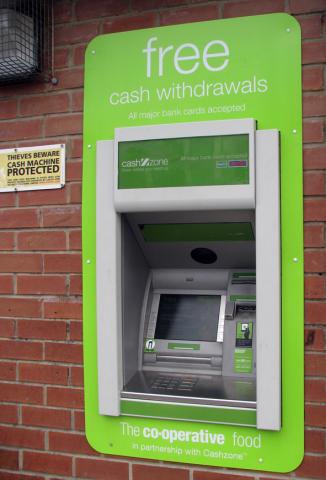
Take for example withdrawing money from an ATM or cashpoint machine. Once a card has been inserted, multiple signals are sent from the ATM to the bank, which in turn verifies the personal identification number (PIN). This allows the bank to ensure that the card belongs to the right customer and that it is a valid card.
This same procedure can be applied to the connected car. If a car needed to apply autonomously an emergency brake, it would only have a few milliseconds to process and implement the command. During this time, several hundred encrypted messages will be sent and received from the cars and surrounding infrastructure via V2X communications, telematics and other wireless connections. As well as receiving the command, the messages also need to be verified and authenticated as coming from a trustworthy source. Once this verification process is completed, the car will have clearance to apply the emergency brake.
This process is a mirror of what is currently used in the banking industry – albeit at greater speed and complexity – and when carried out effectively will guarantee there is no interference from outside elements trying to disrupt the connectivity between the various vehicle-to-X (V2X) communications technologies or to manipulate critical car functions.
Personal information
Another precondition for making V2X communications a success is the protection of personal data, such as location information or driver ID, which could be stored within the smart and secure vehicles of the future.
Key elements of secure systems are so called roots of trust or trust anchors, which contain and protect specific data. These trust anchors are small crypto-chips that are today also used in products such as banking cards, passports and health cards. To authorise a new card, encrypted signals are sent to a trust centre to verify the authenticity of such a card. Within the trust centre, a protected database exists that contains the data for different cards. Based on these data, it is possible to verify if a new PIN that has been entered into the ATM machine really belongs to that specific card.
The same technology can also be used to protect personal data within connected cars and to verify who can have access to the infrastructure. So in the smarter world when a coffee order and payment information is sent to a service station five kilometres away, the secured IT communications will ensure the signal isn’t intercepted by an unauthorised user posing as a service station. To enable these systems, the used chips have to be optimally protected against hacking so potential hackers are unable to read the encryption algorithms and manipulate the transmitted data.
Security lessons
The banking industry has fallen victim to numerous data breaches and cyber-attacks over the years. However, by regularly upgrading and adapting its security, the industry has developed an intricate and multifaceted security process. As a result, banks have some of the most secure networks and systems of any industry. Replicating this kind of approach and prioritising robust security processes that constantly evolve with potential threats will be essential for the automotive industry to prove the connected car and autonomous driving will be a secure and safe form of transport, gain the trust of drivers and ultimately encourage adoption.
Lars Reger is CTO for automotive at NXP
