Camera chip supports high-resolution connectivity
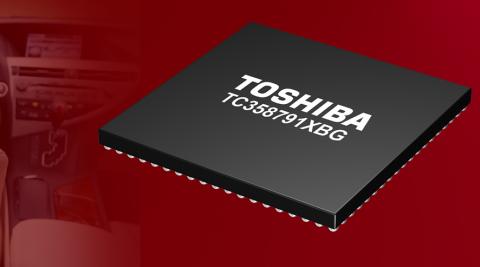
An automotive companion chip has been created by Toshiba to drive high-resolution multimedia (audio and video) and camera connectivity for next-generation infotainment applications in the connected car.
The TC358791XBG supports the latest automotive Gigabit Ethernet AVB standard for applications such as front, rear and surround-view cameras, digital audio, and transferring high-resolution video content to head-unit and rear-seat entertainment systems. It can also seamlessly interface with and support other automotive application processors on the market, thanks to its USB 3.0 and Mipi CSI2 and DSI connectivity for audio and video.
The company says it will conform to AEC-Q100 grade three and will help reduce time to market and overall costs for automotive infotainment systems.
It can split one video input into two pictures and can simultaneously drive two high-resolution LVDS digital displays. Examples include head units, instrument clusters and parking aid vision systems.
High-resolution audio and video data can be sent from the host processor to multiple displays or other electronic control units in the car, and it has an HDMI 1.4 receiver interface to connect smartphones and other HDMI-enabled devices to the application processor.
Housed in an FBGA257 15 by 15mm package with 0.8mm ball pitch, the chip’s other features include differential CVBS (composite) interfaces for analogue composite video sources, support for early back-up camera view (CVBS to LVDS), and ability to relay packetised IQ audio tuner data to the host via USB.
Samples are available now.
